Skip to content Skip to main navigation Skip to footer

Retro Games and Earthlings Land

Start Pokemon Adventures the Red Way

Start Pokémon Adventures the Red Way: A Spoiler-Light Reading Guide

Excerpt
If you want a Pokémon story that feels closer to the games, Pokémon Adventures is a great manga to start with. Also known as PokéSpe or Pocket Monsters SPECIAL, it’s region-by-region, game-inspired, and not afraid to raise the stakes while keeping the thrill of exploration front and center. This spoiler-light guide gives you a clean Red-first route, plus a few bonus side paths for official reading, subscription-friendly Pokémon games, and retro break-time picks.

Spoiler note
This roadmap is spoiler-light. The games/subscription section names a few classic titles and lightly references later regions, but avoids major manga plot reveals.

Why Starting with Red Works So Well

Some manga ask you to trust the vibe first and the world later. Pokémon Adventures does the opposite: it drops you into a world that already feels familiar if you’ve spent any time with the games.

That’s why starting with Red feels so right. You start in Kanto, where the series lays down its core identity fast: a game-driven structure, a stronger sense of consequence, and a version of Pokémon that feels a little sharper, stranger, and more adventurous than the anime path many readers know best.

For a lot of readers, that makes the appeal click almost immediately:

  • “I love Pokémon, but I want something that feels closer to the games.”
  • “I want a long-running series, but I don’t want to start in a confusing place.”
  • “I want the charm and the stakes.”

Red is the answer.

The Red-First Reading Philosophy (3 Rules)

Rule #1 — Start with the Kanto foundation

Begin where the manga begins. The Kanto material gives you the cleanest feel for PokéSpe’s pacing, tone, and “game-first” storytelling style. It’s the best possible handshake.

Rule #2 — Treat each region like a season

One of the great joys of Pokémon Adventures is that it naturally breaks into satisfying chunks. Each region feels like its own season of a bigger journey, so you can binge hard, pause guilt-free, and always know where you are.

Rule #3 — Pick the format that matches your reading mood

Want a more classic manga-by-manga experience? Go with the standard volumes. Want a smoother binge with fewer book swaps? The Collector’s Edition line is your best friend.

Spoiler-Light Manga Roadmap: The Red Route (5 Phases)

This roadmap stays spoiler-light on purpose. Think of it less as a plot guide and more as a map of what makes each phase exciting.

Phase 1 — The Hook (Kanto “Red” era)

You feel the difference almost immediately.

The story moves fast. The world feels more game-shaped. The battles have a little more edge. And the series makes its first big promise to the reader: this is still Pokémon, but it’s not here to coast on familiarity.

If you want the moment where PokéSpe says, “Oh, you thought you knew this world?” — this is it.

Best format:

  • Standard Vol. 1 (Red & Blue)
  • or Collector’s Edition Vol. 1 if you want the binge-ready start

Phase 2 — The Sequel Energy (Johto era)

Once Kanto has you, Johto is where the series proves it’s not a one-region trick.

This phase has that wonderful sequel feeling: a broader world, fresh protagonists, and the sense that the setting keeps moving even when the cast changes. It’s one of the reasons PokéSpe becomes so easy to marathon—every new arc opens a fresh door without making the old one feel irrelevant.

Phase 3 — The Expansion Arc (Hoenn era + the bridge material)

This is the phase where the series really starts to open up.

Hoenn opens the series up in a bigger way, and the surrounding arcs deepen that long-running saga feel. The cast grows, the scale stretches, and PokéSpe starts turning more of the games’ systems, regions, and connective tissue into story momentum.

This is also where the roadmap feels especially rewarding if you started from Red, because now the series begins paying off that “one big world” sensation.

Phase 4 — The Modern Saga (Sinnoh → Unova era)

Now the machine is humming.

By this point, Pokémon Adventures starts to feel like a full-on long-form adventure saga. The arc-by-game structure is still there, but the reading experience gets richer: more serialization energy, more payoff for sticking with the series, and more of that uniquely PokéSpe trick where mechanics, regions, and character drama all lock together.

This is the phase where a casual read can quietly turn into a full obsession.

Phase 5 — Pick Your Region (Kalos and beyond)

Once you’ve got the core route under your belt, you’ve earned the luxury move: follow your favorite region.

Love Kalos? Jump into Pokémon Adventures: X•Y. Prefer later generations? You can keep climbing arc by arc. At this point, you’re not trying to “figure out where to start” anymore—you’re choosing what flavor of adventure you want next.

And that’s the best place to be.

Why PokéSpe Clicks So Fast for Game Fans

✅ It feels closer to the games

This is the biggest one. If your Pokémon heart lives in gym runs, regions, rivalries, and the sense of setting out on a real journey, PokéSpe clicks fast.

✅ It’s willing to raise the stakes

Not in an edgelord way—just in a way that gives the story more bite. The world can feel harsher, the consequences can land harder, and that extra tension is a big part of why the manga stands out.

✅ It’s incredibly easy to read in chunks

This is one of the easiest long manga to recommend because it naturally supports reading in bursts. You can finish a region, take a breather, and come back excited instead of overwhelmed.

✅ It rewards both nostalgia and curiosity

Starting in Kanto gives you that warm, familiar Pokémon spark. Continuing past it gives you the thrill of watching the series keep reinventing itself without losing its identity.

Read It Officially (Pokémon Adventures Editions from VIZ)

If you’re ready to start reading, going official is the easiest path.

Option A — Standard Volumes

If you like reading region by region and watching the shelf fill out one volume at a time, the standard editions are the straightforward route. VIZ organizes the series by arc, which makes it easy to follow the main path from Kanto onward.

Option B — Collector’s Edition

If you want the most binge-friendly option, go with the Collector’s Edition line. It’s tailor-made for binge-reading.

Option C — Region-Labeled Lines

Only care about one generation? That works too. VIZ also has region-labeled lines such as Pokémon Adventures: X•Y, which is perfect for readers who want to follow their favorite game era first.

Side Quest: Pokémon Games (Subscription-Friendly + Buy-Once Picks)

This is where the cross-media fun kicks in.

PokéSpe is such a game-flavored manga that it almost invites a rhythm like this:

read a few chapters → play something Pokémon → jump back in with fresh energy

It’s a great loop.

A) Subscription-Friendly: Pokémon games you can play via Nintendo Switch Online

If you want to keep the game-side fun rolling after PokéSpe, our 2026 guide to game subscriptions is a great next stop for comparing Nintendo Switch Online, Game Pass, PlayStation Plus, and Apple Arcade.

✅ Pokémon Trading Card Game

If you want a compact, charming detour, this is a great pick. It’s available through the Game Boy library and works especially well as a “one more thing before bed” Pokémon side quest.

✅ Pokémon Stadium 2

If you want something more arcade-like and wonderfully nostalgic, this is the big retro flex. It’s in the Nintendo 64 library and is a perfect palate cleanser between manga arcs.

Because PokéSpe is so closely tied to the games, these detours feel less like distractions and more like part of the same adventure. You’re not leaving the Pokémon mood—you’re extending it.

B) Buy-Once Picks

If you’d rather buy one Pokémon game and keep it on your shelf, here are three easy picks depending on the kind of adventure you want next.

Pokémon: Let’s Go, Pikachu! / Let’s Go, Eevee!

Best pick if you love the Kanto starting vibe and want a cheerful, welcoming return to that region.

Pokémon Legends: Arceus

Best pick if you want a more exploration-heavy adventure and like the idea of seeing Pokémon worldbuilding from a different angle.

Pokémon Scarlet / Pokémon Violet

Best pick if you finish this guide thinking, “Actually, I want the newest-feeling big adventure I can get.”

Bonus: Retro Game Subscriptions (Best “Break Time” for Long Journeys)

Long manga journeys are better when you plan little breaks on purpose.

Not the kind where you drift away from the series—the kind that recharge your enthusiasm and make jumping back in even more fun.

🕹 Nintendo Switch Online Classic Games Library

This is the easiest all-purpose break-time option: a huge retro library, quick-start sessions, and the kind of low-friction nostalgia that pairs beautifully with a long reading project.

🕹 PlayStation Plus Classics Catalog

If you also play on PlayStation, this is an easy retro break between bigger manga stretches.

It’s a cozy little side path if you want to stay in that same adventure-loving mood.

Traveling in Japan and want to turn that manga-and-games energy into a real-world treasure hunt? Our BOOKOFF Japan guide for travelers shows you where to browse manga, used games, and other fun finds in one stop.

Quick Recap: Extra Paths to Try

Once you’ve got your reading route in mind, the rest is just picking the kind of side path that sounds the most fun. You can read Pokémon Adventures officially through the standard VIZ volumes, go for the Collector’s Edition line if you want a smoother binge, or jump into a region-specific line if there’s a particular generation you already love.

If you want to keep the Pokémon mood going between arcs, a classic side game on Nintendo Switch Online makes an easy detour. And if you’re in the mood for a broader retro break, the classic game libraries on Switch or PlayStation can be a fun way to recharge before diving back in.

The main thing is simple: keep Pokémon Adventures at the center, and treat everything else as a bonus path you can take whenever the mood hits.

Where to Start

Want the easiest starting point? Begin with Pokémon Adventures (Red & Blue), Vol. 1—or pick up Collector’s Edition Vol. 1 if you want a more binge-friendly start.

If you’d rather jump from the manga into a game with strong Kanto energy, our guide to Pokémon FireRed & LeafGreen on Nintendo Switch covers the release date, price, multiplayer, and the Japan Special Edition.

Sources

Official Sources

Official English publisher / editions

Pokémon games on subscription

Retro subscription hubs

Reference Sources

About Pokémon Adventures

Start Dragon Ball the Goku Way

Start Dragon Ball the Goku Way: A Spoiler-Light Manga Roadmap, Where to Read, and What to Play

Excerpt
Want the easiest, most classic way to jump into Dragon Ball? Start with Goku. Begin at Chapter 1, follow the training-to-challenge rhythm, and watch the series grow from playful adventure into one of the biggest shōnen rides ever. This spoiler-light guide gives you a clean manga roadmap, plus a few bonus detours for official reading apps, Dragon Ball games, and retro break-time picks.

Spoiler note:
This guide is spoiler-light. The game section may mention saga names, platforms, or features that lightly hint at later parts of the series.

Why Starting With Goku Is Just More Fun

If you are brand new to Dragon Ball, the cleanest way in is also the most fun: start with Goku.

Not because it is the “correct” way in some intimidating fan-rulebook sense.
Because it lets you experience the series the way it feels best: as a climb.

Dragon Ball is built on an incredibly addictive rhythm: train, try, get stronger, face something bigger. That loop is simple, satisfying, and very hard to stop reading once it starts working on you.

And starting from the beginning means you get all the good stuff in the right order: the adventure, the weirdness, the comedy, the early martial arts flavor, the rivals, the rising scale, and that great feeling of realizing, “Wait, this is getting huge now.”

It is not just a collection of famous moments.
It is a journey that gets cooler as it opens up.

If you are reading in English, this is also the least annoying route. Official platforms make it easy to begin at Chapter 1, so you can skip the “what order do I do this in?” spiral and just get moving.

The Goku-First Vibe Check (3 Rules)

Rule #1 — Think growth, not just fights

Yes, Dragon Ball has iconic fights. Obviously.

But the reason people get attached is not only the action. It is the feeling of progress. Training matters. Technique matters. Hitting a wall matters. Getting back up matters.

That is why Goku-first works so well: you are not just watching power happen. You are watching improvement happen.

Rule #2 — Read it in phases

Do not think of Dragon Ball as one giant brick.

Think of it like a ride with clearly different zones. Early on, it is playful and adventurous. Then it gets sharper, more competitive, bigger, heavier, and more explosive. Breaking it into phases keeps it fun and makes it way easier to binge.

Rule #3 — You do not need the whole franchise map right now

You do not need to solve Dragon Ball on day one.

You do not need a twelve-tab continuity spreadsheet.
You do not need to pre-plan every branch.
You do not need to decide your game tier, manga app loyalty, and future opinions before Chapter 1.

Start with the main road. Branch out later.
That is the whole trick.

Your Spoiler-Light Dragon Ball Route (5 Easy Phases)

This roadmap keeps things spoiler-light and focuses on what each phase feels like.

Phase 1 — The “Oh, This Is Charming” Phase

Adventure, comedy, and martial arts basics

This is where you meet Dragon Ball in its original form: playful, funny, a little chaotic, and full of personality. You get the sense of adventure, the oddball charm, and the first taste of how training and technique matter.

If your only idea of Dragon Ball is “giant screaming and beams,” this phase is a very fun surprise.

This is the part where you may find yourself thinking:
“Wait, this is way more fun than I expected.”

Phase 2 — The “Okay, Now I’m Locked In” Phase

Tournaments, rivals, pressure, and skill growth

This is where the series gets absurdly bingeable.

You get structure. You get clean rival energy. You get rules, pressure, progression, and the joy of watching someone actually improve instead of simply being treated as strong because the story said so.

This phase has a sporty, competitive pulse to it that makes pages disappear fast.

Phase 3 — The “Whoa, This Got Bigger” Phase

The tone widens and the stakes start hitting harder

Here is where Dragon Ball starts stretching.

The world feels larger. The tension lands more strongly. The series still has its energy and personality, but now it begins to show another gear. You can feel the atmosphere changing. You can feel the scale lifting.

This is often the point where “I’m checking out a classic” turns into
“Okay, I fully get it now.”

Phase 4 — The “Just One More Chapter” Phase

Big sagas, huge momentum, and full Dragon Ball Z energy

This is the legendary big-stage zone.

Everything gets larger: the emotions, the danger, the cliffhangers, the “how are they getting out of this?” energy. This is the phase that helped define battle shōnen for a lot of fans around the world.

If Dragon Ball has ever felt like a giant cultural object hovering in the distance, this is where a lot of that aura comes from.

This is also the phase most likely to eat your night.

Phase 5 — The “I’m Still Not Done” Phase

Dragon Ball Super and the modern continuation

If you finish the classic run and immediately want more, Dragon Ball Super is the natural next stop.

It keeps the universe moving, opens up new directions, and gives you that excellent Dragon Ball feeling of the road getting wider again just when you thought you had reached the end.

Why This Route Hooks So Many English-Speaking Fans

The training arc appeal is real

Part of what makes Dragon Ball so appealing is that progress feels earned. Improvement is tied to effort, pressure, technique, and trying again. That idea lands so well because it is simple and satisfying.

You do not need a giant lore speech to understand why it works.

Rivalries stay fun

Dragon Ball knows how to make competition feel exciting without making everything feel miserable. Even when the series gets intense, there is still a sense of movement, challenge, and spark that keeps the whole thing lively.

It wants to thrill you, not exhaust you.

You can feel how influential it is

As you read, you may get that weird, fun sensation of realizing:
“Oh. So this is where a lot of later stuff got it from.”

The escalating ladder, the training logic, the increasingly bigger stage, the dramatic momentum—it is all here in a form that still reads fast.

Where to Read It Officially

If you want the easiest official place to start in English, digital reading platforms are the way to go.

Option A — VIZ / Shonen Jump

Best for: anyone who wants a clean official English route
VIZ is the straightforward option. It gives you an official way into Dragon Ball and Dragon Ball Super, and it is an easy choice if you just want to start reading without fuss.

This is the “open the front door and go” choice.

Option B — MANGA Plus

Best for: anyone who likes app-based reading and official manga platforms
MANGA Plus is a strong companion option, especially if you already use manga apps and want an official platform in that ecosystem. It is particularly useful if you want to keep your reading setup simple and phone-friendly.

This is the “let me do this from my app and keep scrolling” choice.

Side Quest: Best Dragon Ball Game Paths

Sometimes you want to do more than read.
Sometimes you want to punch something immediately.
That is where games come in.

A) Subscription-Friendly Route

If you want a broader side-by-side breakdown before choosing a service, check out our 2026 guide to game subscriptions for a clearer look at how Game Pass, PlayStation Plus, Nintendo Switch Online, and Apple Arcade compare in real life.

Best for: “I already pay for a catalog, what can I try right now?”

PlayStation Plus

Dragon Ball Z: Kakarot has appeared in the PlayStation Plus Game Catalog before, so checking the current catalog is an easy low-commitment way to see what is available now.
Because subscription lineups change, the safest move is to search the live catalog for Dragon Ball titles.

Xbox Game Pass

Same basic strategy here. Availability changes, so this works best as a “go search the current catalog” recommendation rather than a locked promise.

That way, the recommendation stays useful even as the catalog changes over time.

B) Buy-Once Picks

Best for: anyone who already knows what kind of experience they want

DRAGON BALL Z: KAKAROT

Best for: story-first fans, RPG players, “let me live in this world” energy

Kakarot is the pick if you want Dragon Ball as a journey. It leans into exploration, story progression, and the feeling of moving through the world rather than only dropping into isolated fights.

This is the most “I want to hang out inside Dragon Ball for a while” option.

Dragon Ball FighterZ

Best for: competitive players, combo enjoyers, spectacle lovers

FighterZ is the pick if you want speed, style, and anime fight energy turned all the way up. It is flashy, sharp, and perfect if you want the thrill of high-speed battles and strong visual impact.

This is the “I would like my Dragon Ball loud, please” option.

Tiny Bonus Round: Retro Breaks

A long manga journey is great.
A quick retro break can be great too.

If you want a small change of pace between reading sessions, subscription libraries with classic games can be a fun extra.

If you are curious why retro keeps showing up in modern gaming, our look at how fast the retro gaming market is growing breaks down what is driving that momentum.

Nintendo Switch Online — Classic Games Library
A nice option if you want some old-school energy and a lighter detour between manga sessions.

PlayStation Plus Classics Catalog
A good extra stop if you are in the mood for a nostalgic break on PlayStation without overthinking it.

And if you happen to be visiting Japan, our BOOKOFF Japan guide for travelers is a useful extra stop for finding manga, used games, and easy Dragon Ball-adjacent souvenir picks in one treasure-hunt-style shop visit.

Quick Recap

If you want the easiest way to jump into Dragon Ball, here’s the order that makes the most sense.

Start with the official manga, since that’s the main thing this article is about:

  • Read Dragon Ball on VIZ
  • Read Dragon Ball Super on VIZ
  • Read Dragon Ball Super on MANGA Plus

Next, check the subscription libraries if you want a low-commitment way to try a game:

  • Check the current PS Plus catalog for Dragon Ball
  • Check the current Game Pass catalog for Dragon Ball

If you already know you want to buy a game, these are the strongest picks:

  • Get DRAGON BALL Z: KAKAROT
  • Get Dragon Ball FighterZ

And if you want a few bonus options, there are also some retro extras worth a look:

  • Explore Nintendo Switch Online classics
  • Learn about the PS Plus Classics Catalog

Official Sources

Official manga reading

Dragon Ball games

Subscription catalogs

Retro subscriptions

Start ONE PIECE the Fun Way

Start ONE PIECE the Fun Way: A Spoiler-Light Luffy Roadmap with Used Manga, Games, and Retro Breaks

If you want the most classic, satisfying way to get into ONE PIECE, the best starting point is probably the simplest one: follow Luffy first.

You do not need to memorize the world.
You do not need to study the power structure before chapter one.
You do not need to learn every faction, island, or mystery before you are “ready.”

Just start with Luffy.

Watch how he smiles, how he moves forward, how he trusts people, and how quickly the story begins to feel bigger without losing its heart. Because ONE PIECE may be famous as a pirate epic, but what makes people stay is something warmer than that.

At its core, this is a story about freedom, loyalty, and the found-family energy of a crew that becomes impossible not to care about.

This guide keeps things spoiler-light and focuses on a simple question:
Where does ONE PIECE become unforgettable if you follow Luffy’s journey first?

And because this is a long adventure, we are not stopping at manga alone.
Part of the fun is how ONE PIECE can open into other kinds of entertainment:

  • reading the manga officially
  • getting pulled into the used manga / collector side of the hobby
  • checking out ONE PIECE games through subscription services
  • and even taking a break with retro game libraries when you want a breather between big story stretches

That is the real appeal here.
ONE PIECE is not just something to start. It is something that can expand your entertainment world.

Spoiler Note

The manga roadmap below is spoiler-light.
The game sections may mention arc names or lightly suggest the vibe of later material.

Why Starting With Luffy Works So Well

ONE PIECE is huge.
That is part of the magic, but it can also be intimidating from the outside.

There are a lot of characters.
A lot of history.
A lot of worldbuilding.
And from a distance, it can look like the kind of series you need to “prepare” for.

You do not.

The easiest way in is not through lore. It is through emotional momentum. And Luffy is the character who gives the story that momentum from the very beginning.

He is not complicated in a way that keeps you at arm’s length.
He is clear. Direct. Instantly readable.
You understand very quickly what kind of person he is, what matters to him, and what kind of story forms around someone like that.

That matters because ONE PIECE gets larger and larger as it goes, but Luffy keeps it grounded. He gives readers a constant center of gravity.

So “Luffy-first” is not just a beginner-friendly route.
It is one of the most natural ways to experience what makes ONE PIECE special in the first place.

The Luffy-First Philosophy: 3 Simple Rules

Rule #1 — Read it as a story about freedom and found family

If you read ONE PIECE as “just a pirate manga,” you will miss the thing people fall in love with most.

Yes, there is adventure.
Yes, there is action.
Yes, there is a giant world.

But the emotional engine is the crew.
It is the bonds, the loyalty, and the moments where those relationships are tested.

Follow Luffy first, and that emotional core becomes obvious very quickly.

Rule #2 — Treat each arc like a season of a long-running show

ONE PIECE is a long journey, but it is not one endless blur.
Different arcs hit in different ways.

Some are light and joyful.
Some are all momentum.
Some quietly sneak up on you.
Some hit like a tidal wave.

If you think of each major arc as its own “season,” the experience becomes much easier to enjoy without feeling overwhelmed.

Rule #3 — In the beginning, only remember three things

You do not need to remember everything at once.

Early on, these three anchors are enough:

  • Luffy’s dream
  • the crew’s bond
  • the fact that the world is larger and more layered than it first appears

That is more than enough to get hooked.

A Spoiler-Light Manga Roadmap: The Luffy Route in 5 Phases

This roadmap avoids plot spoilers and focuses on the feeling of each phase—what it gives you, and why it matters.

Phase 1 — The Hook

This is where you fall for the atmosphere.

The early stretch is about tone, charm, and emotional trust.
This is where you learn who Luffy is, what kind of energy surrounds him, and why people start gathering around him in the first place.

The story is not operating at full scale yet, and that is exactly why this stage works so well. It feels close. Warm. Personal.

It is funny.
It is adventurous.
It is more emotional than you expect.
And before long, you realize you already want to stay on this ship.

The first thing you are supposed to love in ONE PIECE is not the complexity.
It is the feeling of being there.

Phase 2 — First Big Proof

This is where the world starts feeling much bigger.

The series begins to widen its scope here.
The sense of adventure remains, but now you can feel the world breathing around the crew. The story no longer feels like a string of fun encounters—it starts feeling like a real, living world.

What makes this phase so effective is that the scale increases without losing the warmth that got you invested in the first place.

This is often the point where readers realize:
“Oh, this can actually become something massive.”

Phase 3 — The Defining Turn

This is where many readers understand the obsession.

This stage is where several of ONE PIECE’s strengths start firing at once: loyalty, rebellion, payoff, emotional clarity, and Luffy’s ability to pull people forward through action rather than speeches.

This is also the kind of stretch that tends to rank very high with English-speaking fans, because it showcases the series at its cleanest and most emotionally satisfying.

For many readers, this is the point where the series stops being “good” and becomes deeply personal.

You are no longer reading to see what happens next.
You are reading because you do not want to leave these characters behind.

Phase 4 — Emotional Detonation

This is where the story proves it can really hurt.

ONE PIECE is often remembered for its fun, freedom, and adventure—but this phase reminds you that those things carry weight.

The scale is larger.
The emotional cost is sharper.
The world feels heavier.

This is the kind of material that changes the way readers see both Luffy and the world around him. It is not just dramatic. It feels consequential.

Spoiler-light version: this is where your affection for the series often becomes something more lasting.

Phase 5 — Modern Payoff and Spectacle

This is where the long journey starts paying you back in full.

A long-running series only earns its length if that investment eventually comes back as something bigger, richer, and more rewarding.

This phase is where ONE PIECE shows what it can do when years of emotional setup, worldbuilding, and character attachment all begin to pay off at scale.

It is large, intense, visually huge, and emotionally loaded in the best way.
And if you came in through Luffy, this is where you really feel the power of having followed that path from the start.

It gives you one of the most satisfying feelings a long series can offer:
“I’m glad I stayed.”

Why English-Speaking Fans Connect With Luffy So Easily

Luffy is simple—but never shallow

Luffy is one of those rare protagonists who can cross language and culture barriers almost effortlessly.

He is easy to understand, but not thin.
He is funny, but never unserious.
He is direct, but not boring.

That clarity makes him an ideal anchor for international readers.

The found-family side of ONE PIECE travels extremely well

Many of the arcs that English-speaking fans consistently celebrate are not just “the biggest” arcs. They are the ones that hit hardest on loyalty, trust, sacrifice, and emotional payoff.

That is exactly why a Luffy-first route works.
It leads readers straight into the strongest emotional current in the series.

He keeps the story readable even when the world gets huge

ONE PIECE gets broader, denser, and more ambitious over time.
But Luffy keeps the reading experience from becoming cold or overly technical.

No matter how large the world becomes, you still know what the heart of the story feels like.

That is a big reason so many readers stick with it.

Start Officially, Then Expand Into Print and Used Manga Collecting

The cleanest entry point for most English-speaking readers is still the official route.

It is easy.
It is safe.
It supports the creators.
And it lets people try the series without friction.

Option A — Start with MANGA Plus

If you want the easiest “just try it” path, this is a strong place to begin.

Option B — Move to VIZ / Shonen Jump if you start binging

Some readers only need a small taste before they know they are in.
If that is you, the binge-friendly route matters.

Then comes the fun expansion: print, used manga, and collector energy

This is where the article can widen from “reading guide” into something more entertaining.

Because ONE PIECE is not just a series people read.
It is a series many people eventually want to own.

You find a favorite stretch and want it on your shelf.
You want to flip through certain volumes physically.
You want the spines lined up.
You want that satisfying feeling of building the journey in your own space.

And that is where the used manga market becomes more than a budget option.
It becomes part of the fun.

If you ever want to turn that shelf-building impulse into a real treasure hunt—especially in Japan—our BOOKOFF Japan guide shows one of the easiest ways to browse used manga and games in one stop.

For a long-running series like ONE PIECE, used manga can feel like the gateway into a collector mindset:

  • hunting for sets
  • finding good-condition volumes
  • building a shelf gradually
  • turning reading into collecting

That is the key framing.
This is not only about saving money. It is about expanding the way you enjoy the series.

Read it officially first.
Then, if the story really grabs you, let it spill into print, used sets, and collector-style shelf appeal.

That is when the entertainment experience starts branching outward.

Side Quest: ONE PIECE Games

When reading turns into playing

Long manga journeys have a rhythm to them.
Some days you want to read for hours.
Other days you still want the energy of the series, but not necessarily more pages.

That is exactly where games become a fun detour.

And with ONE PIECE, the jump from manga to games feels natural.
You are not leaving the world behind.
You are just engaging with it from a different angle.

A) Subscription-friendly: the fun of checking what is available right now

If you are not sure which service fits your platform or play style, our 2026 game subscriptions guide helps you compare Game Pass, PlayStation Plus, Nintendo Switch Online, and Apple Arcade before you start browsing.

Xbox Game Pass

ONE PIECE titles have appeared through Game Pass-related availability before, which makes it a very natural “check here first” category.

But the important part is the wording:
do not promise a title is included.
Tell readers to check the current catalog.

That framing is both safer and more clickable, because it turns the subscription angle into part of the experience:

Maybe it is there right now. Maybe you discover something new.

PlayStation Plus

The same idea works here.
Instead of making outdated claims, guide readers toward the official A–Z catalog and let discovery do the work.

That keeps the article useful over time while still making the subscription path feel active and fun.

B) Buy-once picks: two easy directions

ONE PIECE: PIRATE WARRIORS 4

This is the pick for days when you want pure momentum.

It is loud, flashy, fast, and satisfying in a very immediate way.
If reading gives you the emotional attachment, this kind of game gives you the release.

Best for readers who want:

  • huge action
  • lots of characters
  • pure hype energy

ONE PIECE ODYSSEY

This one leans more into RPG adventure energy.

If what you like most is the crew dynamic, the journey, and the feeling of moving through a world with the Straw Hats, this is an easier tonal match.

Best for readers who want:

  • JRPG pacing
  • party-based adventure
  • a more exploratory vibe

Bonus Detour: Retro Game Subscriptions as the Perfect Break

This is where the article can widen even further in a fun way.

ONE PIECE is a long journey.
And long journeys are better when they have rest stops.

That is what retro game subscriptions are in this kind of entertainment path:
a small harbor between major story stretches.

If retro breaks become part of your rhythm, it also helps to understand why the retro gaming market is still growing—and why there is still room beyond pure nostalgia.

You spend time with a huge modern manga.
Then, instead of jumping immediately into another giant thing, you pick up a short, classic game for an hour.
The contrast is part of the pleasure.

Nintendo Switch Online — light, nostalgic, easy-to-dip-into fun

Retro libraries work especially well when you want something compact.

You may not want another giant commitment.
You may just want a little burst of fun between major manga phases.

That is why classic game libraries fit so well into this article’s entertainment arc.
They keep the hobby moving without exhausting the reader.

PlayStation Plus Classics Catalog — nostalgia as a side path

This has a slightly different appeal.
It is not just about playing old games. It is about revisiting a different era of entertainment while you are deep inside a modern fandom journey.

That contrast can be genuinely refreshing.

ONE PIECE gives you the long-form emotional adventure.
Retro libraries give you quick, self-contained bursts of play.

Together, they create a broader entertainment loop rather than a single-track recommendation article.

Quick Recap: How the Entertainment Path Expands

This is the real shape of the article:

  1. Start reading ONE PIECE
  2. Get attached enough to want volumes on your shelf
  3. Discover the fun of used manga and collector-style buying
  4. Branch into ONE PIECE games through subscriptions or buy-once picks
  5. Take retro gaming breaks between big story phases

That is why this concept works.

It is not just a “how to start ONE PIECE” piece.
It is a guide to how one fandom entry point can expand into a broader entertainment lifestyle.

And that is the success condition:
the fun keeps widening.

Primary Sources

Official manga reading (subscriptions)

Game subscriptions

ONE PIECE games (official pages)

Retro game subscriptions

Context / Reference

Metroid 1986 1987 Beginner s Guide x

What Is Metroid (1986/1987)? A Beginner-Friendly Guide to Its Story, Release History, Gameplay, and Lasting Appeal

Metroid is Nintendo’s original sci-fi exploration classic: first released in Japan in 1986 for the Famicom Disk System and internationally on the NES in 1987. For new players, the simplest way to understand it is this: you land on a hostile planet, explore a maze-like world, find permanent upgrades, and gradually unlock the path to the final objective. This guide breaks down the game’s release history, story, structure, password system, and the reasons it still feels important today.

Metroid (1986/1987) at a Glance

CategoryInformation
TitleMetroid
First releaseAugust 6, 1986 (Japan, Famicom Disk System)
International releaseAugust 15, 1987 (North America, NES) / January 15, 1988 (Europe, NES)
PlatformsFamicom Disk System / Nintendo Entertainment System (NES)
GenreSingle-player action-adventure
Core structureExploration, permanent upgrades, and backtracking
SettingPlanet Zebes
ProtagonistSamus Aran
Main objectiveDestroy Mother Brain and stop the Metroid threat
Password systemPassword-based continuation
Modern availabilityNintendo Switch Online

Quick Facts About Metroid (1986/1987)

  • Original release (Japan, Famicom Disk System): August 6, 1986.
  • NES release (North America): August 15, 1987.
  • NES release (Europe): January 15, 1988.
  • Genre and format: single-player action/adventure built around exploration and upgrades.
  • Save style on NES: password-based continuation (not battery saves).
  • Modern access: included in Nintendo’s official NES classics lineup on Switch Online, listed as “Metroid (1987)”.

Metroid Story Summary: What Happens on Planet Zebes?

The story opens with a classic sci‑fi emergency: a deep‑space research ship is attacked, and a capsule containing an unknown life-form from Planet SR388 is stolen by Space Pirates.
That life-form can multiply rapidly if exposed to beta rays for 24 hours, which turns the theft into a potential galaxy-wide catastrophe.

The pirates’ headquarters is discovered on Planet Zebes, described as a natural fortress with a complicated maze-like interior.
A direct assault fails, so the last-resort plan is to send one elite hunter in alone: Samus Aran, tasked with destroying the central control entity known as Mother Brain.

A beginner-friendly way to think about the plot: it’s not about complicated politics; it’s a “break in, stop the bio-weapon, shut down the brain” mission with a strong sense of urgency.
The manual also plays coy about Samus, calling the true identity “shrouded in mystery,” and even uses male pronouns in places—one of those old-school twists that became legendary later.

How Metroid Gameplay Works

Metroid isn’t a straight line of levels. It’s a connected world made of zones linked by doors and elevators, where routes fold back on themselves like a big, hostile subway map.
The game’s design pushes exploration by placing obstacles that are impossible at first, then making them doable after you find the right upgrade.

The official manual emphasizes “hunt out the Power Items” because upgrades are the real keys—more than raw reflexes.
Early Samus has limited range and limited options; later Samus becomes mobile, tanky, and dangerous, and the planet starts feeling smaller in a satisfying way.

Backtracking is a feature, not busywork. New abilities often unlock multiple earlier doors or hidden routes, so old rooms turn into shortcuts, treasure stops, or gateways deeper into the planet.
That design also means the game naturally supports different routes: experienced players can reach areas earlier than “intended,” which later fed the speedrunning culture around the series.

Why the NES Version of Metroid Uses Passwords Instead of Saves

On NES, Continue brings up a password entry screen, and a password is shown when the game ends so you can resume later.
That’s not just a cute retro quirk—passwords were a common solution when cartridges didn’t include persistent save hardware.

The manual even teaches the process step-by-step: choose START or CONTINUE, enter letters/numbers with the cursor, and retry if the entry is wrong.
This matters for beginners because it changes the rhythm: progress is measured by what you discovered and which upgrades you secured, then encoded into a password so the game can reconstruct a restart state later, rather than relying on an autosave file.

The password system also helped create a side culture of famous codes and strange effects—some legitimate, some accidental, some chaotic.
Even if you never use any special passwords, understanding that your progress is “encoded” explains why the game feels different from modern checkpoint-heavy design.

What Is the Goal in Metroid?

The mission goal is straightforward: destroy Mother Brain in the planet’s central base and prevent the Metroid life-form from being weaponized.
Getting there is the real adventure: Zebes is a maze, and the path forward is blocked by threats, gates, and environmental challenges that require upgrades to overcome.

The manual breaks the planet into major zones and frames progression as clearing the early regions before pushing into the central base.
A beginner-friendly mental model:

  • Explore → get stronger → reach deeper areas → repeat, until the central base finally opens up.

That structure is why the game can feel “aimless” for the first hour and then suddenly feel very directed—because the direction comes from what your new tools let you do.
Once the route clicks, the game’s pace accelerates, and the earlier confusion turns into confident movement across areas you used to fear.

Metroid Endings Explained: Why Completion Time Matters

Metroid explicitly ties the “final outcome” to how long the mission took, as stated in the official manual.
That design decision quietly encourages replays: once you finish, the game naturally invites the question, “How much faster can this be?”

This time-based ending concept also reinforced the idea that routes and efficiency matter, not just survival.
Later sources document more detailed thresholds and multiple ending variants, but the key confirmed point is the existence of time-based outcome changes.

For beginners, the best takeaway is simple: the game is happy to reward improvement. Finishing once is the “graduation,” and finishing cleaner/faster becomes the fun extra challenge.
That replay-friendly structure is one reason Metroid remained culturally loud long after the original hardware era ended.

Why Samus Is Called a “Space Hunter”

Nintendo’s Japanese catalog description refers to Samus as a space hunter, anchoring the term as part of the franchise’s early identity.
That label fits the premise: Samus is essentially hired to do what fleets can’t—surgical infiltration and total shutdown.

Retrospectives citing developer interviews also mention “Space Hunter” as an early working title before “Metroid” was finalized, often explained as a blend of “metro” and “android.”
That naming story matches how the game feels: underground corridors and tech-heavy sci‑fi vibes, with a protagonist that early materials treat as more “mysterious cyborg” than “fully defined character.”

The manual’s language around Samus also reflects that early ambiguity—identity kept vague, pronouns inconsistent, mystery emphasized.
All of this helped create one of gaming’s most famous early surprises without needing a big cinematic reveal.

Where to Play Metroid Today

Nintendo’s official Switch Online NES classics page lists Metroid (1987) among the included games, keeping the original readily accessible.
That modern availability is important because it preserves the original experience while removing the hardest part of retro gaming: tracking down working vintage hardware and cartridges.

Playing it today also helps explain why later entries (2D and otherwise) treat upgrades, exploration, and atmosphere as sacred.
The game still stands as a clear example of “power-up gated exploration,” where the map is a puzzle box that opens gradually as your kit expands.

It also remains a neat historical contrast: modern games often mark objectives and map everything, while Metroid expects you to learn the planet like a place you’ve actually been.
That difference is exactly why some players bounce off… and why others get totally hooked.

If you’re comparing Nintendo Switch Online with other modern game subscription services, this broader guide breaks down how it stacks up against Game Pass, PlayStation Plus, and Apple Arcade in 2026: The Ultimate 2026 Guide to Game Subscriptions (US).

Why Metroid Is Still So Fun

The “From Fragile to Fearsome” Power Curve

Metroid starts with Samus underpowered—short range, limited options, and lots of danger per step.
Then upgrades arrive, and each one feels like a personal cheat code you earned: longer reach, better mobility, and more ways to survive Zebes’ nastiness.

The manual directly calls out the importance of collecting Power Items and describes how they add new attack methods and strengthen Samus.
That design makes progress feel physical: you can remember the exact moment the game went from “please don’t touch me” to “okay, I’m the problem now.”

Exploration That Feels Like Solving a Location

Zebes works like a maze with logic: doors, corridors, and elevators connect big regions, and your understanding of how they link becomes a skill.
Instead of giving constant hints, the game uses obstacles and gating to teach you what you need, then dares you to find it.

The fun comes from building a mental map: “this door needs missiles,” “this hallway has a suspicious block,” “this elevator connects the next zone.”
Once you know the layout, the same world that felt confusing becomes a playground for routing and efficient movement.

Atmosphere: Isolation With Teeth

The manual sets the stage as a fortress planet with traps and enemies waiting around corners, which matches the game’s lonely, hostile feel.
Metroid’s world design leans into tension: narrow corridors, sudden threats, and the constant sense that you’re deep inside something that doesn’t want you there.

Even without modern cinematic storytelling, the premise—one hunter versus a planet—creates strong mood through pacing and layout alone.
That atmosphere became a core identity for the franchise and is still recognizable in later entries.

Replay Value Built Into the Ending

Because completion time affects the ending outcome, the game rewards mastery naturally.
That makes replays feel purposeful: faster routes, fewer mistakes, better upgrade order, cleaner execution.

This design also nudges you into experimenting: alternative paths, early pickups, and “can I reach that area sooner?” thinking.
It’s one of the early console examples of a game gently encouraging speed and efficiency without calling it a “mode.”

The Joy of Finding “The One Item”

Some upgrades don’t just make you stronger—they change what the world means. Suddenly a previously useless corridor becomes a gateway.
That moment—when a new item makes the map “click”—is the heartbeat of Metroid’s design.

The manual’s guidance about finding hidden rooms and power items lines up with how the game rewards curiosity.
The satisfaction isn’t only beating enemies; it’s realizing you’ve outsmarted the planet and unlocked another layer of it.

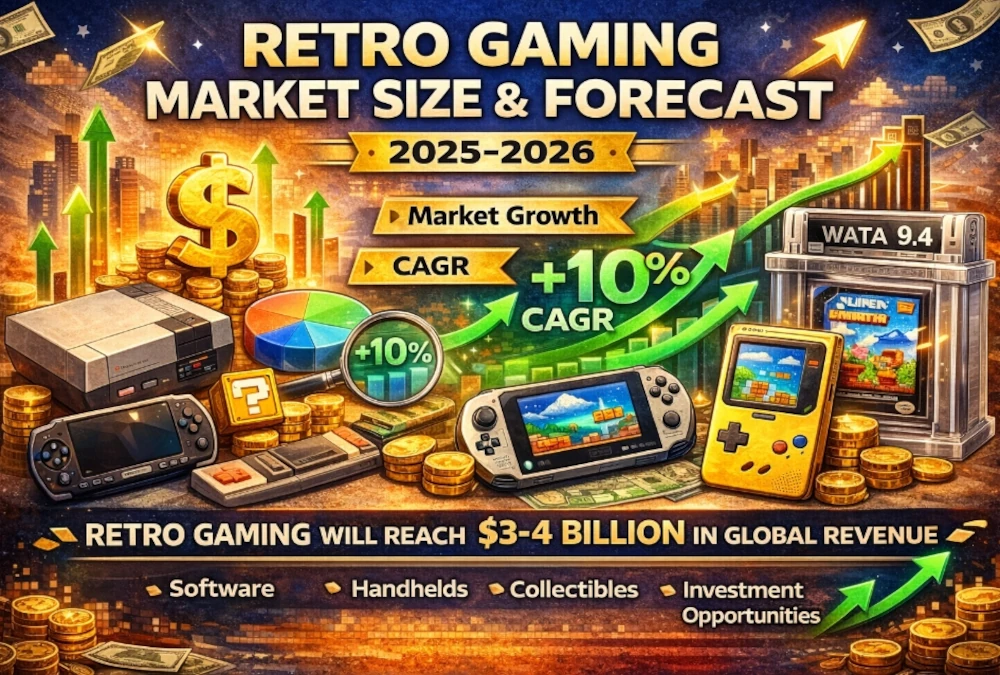
If you’re curious why games like Metroid still matter beyond nostalgia, this market overview explains how retro gaming has grown into a fast-expanding niche with room for collectors, resellers, and genre-focused sites: How Fast Is the Retro Gaming Market Growing? Real Market Size—and Where Individuals Still Have Room.

FAQ

What is Metroid (1986/1987)?
Metroid is the first game in Nintendo’s sci-fi action series. It began on the Famicom Disk System in Japan in 1986 and later released on the NES internationally in 1987, combining action, exploration, hidden upgrades, and backtracking in a way that became hugely influential.

When was the original Metroid released?
The original Metroid launched in Japan on August 6, 1986 for the Famicom Disk System. It released in North America on August 15, 1987 for the NES, and in Europe on January 15, 1988.

What is the story of Metroid?
The story centers on the theft of a dangerous life-form called Metroid from Planet SR388. The Space Pirates take it to Planet Zebes, where they plan to weaponize it, and Samus Aran is sent in alone to infiltrate the planet and destroy Mother Brain.

How does Metroid gameplay work?
Metroid is built around exploration. Players move through a connected world, find permanent upgrades, revisit earlier areas, and use new abilities to open paths that were previously blocked. Progress comes from learning the map as much as from defeating enemies.

Does the NES version of Metroid have saves?
Not in the modern sense. The NES version uses a password system instead of battery-backed saves, letting players continue by entering a code that reconstructs a restart state based on their progress.

Why does Metroid feel confusing at first?
Because the game gives very little direct guidance. It expects players to experiment, test suspicious walls, revisit old areas after getting upgrades, and slowly build a mental map of Zebes. That lack of hand-holding is part of the design.

Why is Metroid still important today?
It helped establish the template for exploration-focused action games built around permanent upgrades and nonlinear progression. Its structure, atmosphere, and progression loop are a major reason later games were described with the genre label “Metroidvania.”

Can beginners still enjoy Metroid today?
Yes, but it helps to know what kind of game it is. Metroid rewards patience, curiosity, and backtracking more than constant forward momentum. Players who enjoy exploration and discovery usually find that it becomes more satisfying the longer they play.

Primary Sources

1) Official NES Instruction Booklet (Nintendo PDF)
URL: https://www.nintendo.co.jp/clv/manuals/en/pdf/CLV-P-NAAQE.pdf
Summary: Explains the SR388 discovery and theft, beta-ray multiplication risk, Zebes infiltration plan, and the mission to destroy Mother Brain; provides detailed START/CONTINUE password instructions; notes that the total time taken changes the final outcome.

2) Nintendo Official Store Page — NES Classics on Switch Online
URL: https://www.nintendo.com/us/store/products/nintendo-entertainment-system-nintendo-classics-switch/
Summary: Official product page describing access to a curated NES library for Switch Online members; the included list displays “Metroid 1987,” confirming its placement and public availability through the service.

3) Nintendo Official Japan Famicom Software Page —
URL: https://www.nintendo.com/jp/famicom/software/fmc-met/index.html
Summary: Official Nintendo JP catalog entry for the Famicom version; highlights Samus Aran and the start of the mission and describes Samus with the “space hunter” label.

build-pacman-style-mini-game-100-hours-godot-github

Build a Pac-Man-Style Mini-Game in 100 Hours with Godot and GitHub: A Beginner’s Guide

Absolutely.

Not a perfect clone.
Not a “full commercial release.”
Not a four-year passion project that disappears into a folder called prototype_final_v12.

A real, playable, one-level, Pac-Man-style mini-game?
Built solo, as a beginner, in 100 hours?

Yes. That future is very real.

And honestly, it is one of the best possible first projects.

Why? Because a Pac-Man-style game has something beginners desperately need: clear shape. You can see the finish line. A maze. A player. A few enemies. Dots. Score. Lives. Sound effects. Win screen. Done.

The trick is not “use AI for everything.”
The trick is to use AI where beginners usually lose time: planning, implementation, asset generation, and debugging.

For this version, the stack is simple:

  • Engine: Godot
  • Language: GDScript
  • Showcase: GitHub
  • Optional “play now” route: GitHub Pages for the web build
  • Optional “download now” route: GitHub Releases for desktop builds

That combo is practical because GitHub Pages is a static hosting service that can publish files directly from a repository, GitHub Releases can package binaries for download, and Godot officially supports web export. For this project, though, GDScript is the safe lane: Godot’s documentation says Godot 4 projects written in C# currently cannot be exported to the web.

How to Use This Guide

Read the full roadmap first. Then move section by section: build the feature, check the official source when needed, and keep going until you have a playable game.

This Is Not a Complete Manual — It’s a Beginner Roadmap

This is a map.

A good map does not force one road.
A good map lets beginners choose a road that still leads to a finished game.

If you can imagine your first playable game clearly enough to believe in it, you are already halfway there.

Here is the target:

  • A one-level Pac-Man-style mini-game
  • Two enemy types
  • Collect all dots to clear
  • Score and lives
  • A few sound effects
  • A GitHub repository that makes the project feel real
  • Bonus points if you publish a browser version

That is not “small.”
That is smart.

A 30-Second Future Simulator

Imagine this:

100 hours from now, you send someone one link and say, “Play this.”

That is the whole dream.

So fix the goal in one sentence:

Build a one-level Pac-Man-style mini-game in Godot and publish it on GitHub, with a browser-playable version if possible.

Now choose your 100-hour container:

  • 2 hours a day for 50 days
  • 5-hour weekend blocks plus small weekday sessions
  • 10 focused days at 10 hours each

There is no perfect schedule.
There is only the one you will actually finish.

And now the most important beginner rule:

Lock your tools to three.

My recommended beginner loadout:
• Godot
• GitHub
• Godot AI Assistant Hub

Add GitHub Copilot only if you want extra implementation help.
Use GitHub Pages later, at the publishing stage.

That is enough to finish a first game without drowning in options.

The Real Secret: Win 100 Hours by Using AI in Only 4 Places

Most beginners think AI helps by “doing the whole project.”

Wrong.

AI helps by shrinking the places where time melts.

Use it here:

Planning

AI is great at helping you cut scope.
That matters more than clever code.

Code Skeletons

Movement systems, UI states, collision behavior, and basic enemy logic are all perfect AI-assist territory.

Asset Volume

Retro-style projects are not about “one masterpiece asset.”
They are about consistent small assets: dots, walls, UI icons, simple portraits, sound placeholders.

Debugging

This is where AI can save entire evenings.
Especially when your game “almost works.”

How to Scope a Pac-Man-Style Game for a 100-Hour Build

This is the ritual.

Do not build the original game.
Build the version that fits in your life.

Must-Have Features

  • Tile-based maze
  • Player movement on a grid
  • Turn buffering, so cornering feels good
  • Two enemy types:
    • one simple chaser
    • one random mover
  • Dots to collect
  • Clear condition when all dots are gone
  • Score
  • Lives
  • Game over
  • Small sound effects for eating, dying, and clearing the level

Dangerous Features for a First 100 Hours

  • Full original ghost behavior
  • Multiple stages
  • Fancy cutscenes
  • Overdesigned menus
  • Too many power-up systems
  • “Just one more mechanic”

Your goal is not “arcade history accuracy.”

Your goal is:

one small game that already feels good to play.

Why Godot + GitHub Is Such a Good Beginner Combo

Godot is a strong beginner choice because it has clear web export documentation, and projects can be shipped to the browser. Godot also has an ecosystem plugin called Godot AI Assistant Hub, which can read and write code inside the editor and can connect to local back ends like Ollama as well as several hosted options. The project is listed as MIT-licensed in both GitHub and the Godot Asset Library.

GitHub is not just a code host here.
It is your display shelf.

  • Pages = “Play it now”
  • Releases = “Download it now”
  • README = “Understand it in 15 seconds”

GitHub Pages can publish from a branch or from a /docs folder, which makes it perfect for a clean beginner setup. GitHub also notes that Pages sites are public on the internet, and its release system is explicitly designed for software packages, release notes, and binary files.

For web export, Godot’s docs recommend using index.html as the export filename, and they warn that renaming exported web files later can cause issues because filenames are expected to stay aligned. Godot’s web export also requires browser support for WebAssembly and WebGL 2.0.

AI-Assisted Tools for Beginners Building a Pac-Man-Style Game in Godot

Prices and plans change often, so verify before publishing. The notes below reflect official pages checked on March 21, 2026.

Code and Implementation

Windsurf

Great when a small change ripples across multiple files. Official docs list Pro at $15/month and Teams at $30/user/month.

Best for: Advanced users

Cursor

Strong for agent-style coding and faster implementation loops. Its public pricing page lists Hobby Free, Pro at $20/month, and Teams at $40/user/month.

Best for: Advanced users

GitHub Copilot

Still one of the easiest starting points for beginners. GitHub currently lists Free, Pro at $10/month, and Pro+ at $39/month for individuals.

Best for: Beginners

Replit

Less relevant if you fully commit to Godot, but still useful if your real enemy is environment setup. Replit’s public pricing currently shows a free Starter tier, Core at $20/month billed annually, and Pro at $95/month billed annually.

Best for: Beginners

Engine-Integrated Help

Godot AI Assistant Hub

This is the most on-theme tool for this stack. It can read highlighted code, write code or docs directly inside Godot’s editor, and connect to local or hosted model providers.

Best for: Beginners

Unity AI

Not the right engine for this article’s main route, but worth mentioning as a comparison point. Unity describes Unity AI as a suite of editor-integrated AI tools, currently in beta, and says it is free during the beta period.

Best for: Advanced users

Planning and Pre-Production

Ludo.ai

Very strong for idea shaping, game concept work, and market-aware pre-production. Official pricing shows Indie at $15/month billed annually and Pro at $35/month billed annually.

Best for: Beginners

Art and Asset Flow

Scenario

Best thought of as a consistency machine. Scenario emphasizes training custom models on your own references to keep outputs aligned with your visual style, and its public pricing information shows a free tier plus paid plans.

Best for: Advanced users

Promethean AI

Less central for a tiny 2D game, but interesting if you grow into more asset-heavy workflows. Its pricing page says it offers a free version with AI asset management and some AI functionality.

Best for: Advanced users

NPC and Character Systems

Convai

Overkill for a first Pac-Man-style project, but valuable if you later pivot into NPC-driven experiences. Convai’s pricing page currently presents plan-based access starting from a Creator tier.

Best for: Advanced users

Coding Support Levels for Beginners

For this project, Godot is the default engine and GitHub is the default home for your project.
What changes is how much coding support you want.

ModeToolsBest ForWhat You GainTrade-off
Hard ModeGodot + GitHubPeople who want to write more by hand and learn through repetitionDeeper understanding of the basicsSlower progress and a higher chance of getting stuck
Normal ModeGodot + GitHub + Godot AI Assistant HubBeginners who want help inside Godot without overcomplicating the workflowEasier implementation inside the engineMore of the cross-file connection work still falls on you
Easy ModeGodot + GitHub + Godot AI Assistant Hub + GitHub CopilotBeginners who want stronger help with implementation, fixes, and code connectionLess manual coding and smoother debuggingSlightly more tool dependency
Advanced Power ModeGodot + GitHub + Windsurf or CursorBeginners who want maximum AI coding support, or faster builders who are comfortable using more powerful toolsStrong multi-file editing and faster iterationPowerful, but easier to lose control of if you are not careful

GitHub Pages comes later, at the publishing stage.
Use it when you want to turn your finished web export into a playable public page.

This guide is not a single path. It is a set of workable routes. If one route feels too hard, change the difficulty, adjust your tools, and try again.

The 100-Hour Roadmap

| 0 – 5 Hours: Lock the Shape

  • One maze
  • Two enemy types
  • Start screen, game screen, result screen
  • Grid movement plus turn buffering

| 5 – 20 Hours: Make Movement Feel Good

This is the soul of the game.
If turning feels bad, everything feels bad.

| 20 – 40 Hours: Add Pressure

  • Enemy A: choose the direction that gets closer at intersections
  • Enemy B: random turns at intersections
  • Contact = lose a life

| 40 – 55 Hours: Add the Win Condition

  • Dots
  • Score
  • “All dots collected” = clear

| 55 – 70 Hours: Make It Feel Like a Game

  • Title screen
  • UI
  • Lives
  • Sound effects

| 70 – 90 Hours: Tune the Fun

  • Enemy speed
  • Pause length
  • Movement rhythm
  • Retry flow

| 90 –100 Hours: Publish Like It Matters

  • GitHub Releases for downloadable builds
  • GitHub Pages for a browser build if your web export works

That final stretch is not “extra polish.”
It is the moment the project becomes real.

How to Publish Your Godot Game on GitHub Pages

This is the part that changes how the project feels.

A GitHub repo is nice.
A browser link is magic.

If you can send someone a link and they can instantly try your game, your first project stops feeling like homework and starts feeling like a real game.

A clean beginner structure looks like this:

  • Repository root
    • README.md
    • screenshots
    • controls
    • “Play Now” link
  • /docs
    • exported web build

That structure works especially well because GitHub Pages can publish from a /docs folder on a chosen branch.

And do not forget the README trio:

  • Play now
  • One screenshot
  • How to play

That alone dramatically increases the chance that someone actually clicks.

Three Prompts That Keep Beginners Unstuck

Grid Movement

“Help me implement player movement in Godot for a Pac-Man-style game using grid movement, wall checks, and turn buffering so the player can queue a direction before reaching a corner.”

Enemy AI

“Write simple enemy movement for a Godot grid-based maze game. One enemy should choose the direction that gets closer to the player only at intersections. Another should choose randomly at intersections.”

Dot Clear Logic

“Help me build a dot collection system in Godot where the level clears when all collectible dots are gone, and the game updates score and UI accordingly.”

Tiny prompts beat huge prompts.
Every time.

The Traps That Kill First Projects

Trap 1: Trying to Recreate the Original Exactly

That is not discipline.
That is scope suicide.

Trap 2: Ignoring Feel Until the End

In this genre, movement feel is not polish.
It is the game.

Trap 3: Adding More Levels Too Early

Every new level multiplies testing, collision checks, spawn issues, and tuning time.

Finish one level first.

Always.

Final Line

If a beginner spends 100 honest hours building one small Pac-Man-style game, puts it on GitHub, and sends one link that says:

“Hey—play this.”

That is already a win.

Not because it is perfect.
Because it is finished.

And finished work changes what you believe you can build next.

One game becomes two.
Two become a shelf.
And one day, your GitHub stops looking like a code host and starts looking like a game cabinet.

That is the real prize.

Choose Your Next Step

Want another small 2D game idea to study by playing?

If this Pac-Man-style project made you want to build another compact arcade-style game, try this one first and look at how its core loop feels in action.
Play it as a development reference: Smackm — a 2D action tap game

Want a modern 3D reference for collect-and-run gameplay?

If you are curious about how maze-like movement and collection mechanics can evolve in 3D, play this as a reference and study how it handles speed, space, and player flow.
Play it as a development reference: Steam Runner

Want to build your own version next?

Go back to the roadmap, choose your coding support level, and make your own small game—one level, one clear goal, and one finished build.

FAQ

Can a beginner really make this in 100 hours?

Yes—if the scope stays small. One maze, two enemies, dots, score, lives, and a clean publish target is realistic. The impossible version is the “arcade-perfect” version.

Should I use Godot or Unity for this?

For this exact beginner-friendly web-publish route, Godot + GDScript is the cleaner fit. Godot officially supports web export, while Godot 4’s C# projects still cannot be exported to the web.

Can I publish a Godot game on GitHub Pages?

Yes. GitHub Pages can publish static files from a repo, and Godot can export for the web. You just need a working web export and a clean publish source such as /docs.

Should I also create a downloadable build?

Yes. Pages is great for instant play, but Releases is ideal for downloadable binaries and versioned updates.

Primary Sources

GitHub Publishing and Distribution

GitHub Pages: What It Is

URL: https://docs.github.com/en/pages/getting-started-with-github-pages/what-is-github-pages
Summary: Official explanation of GitHub Pages as a static hosting service that publishes HTML, CSS, and JavaScript files from a repository. (GitHub Docs)

GitHub Pages Publishing Sources

URL: https://docs.github.com/en/pages/getting-started-with-github-pages/configuring-a-publishing-source-for-your-github-pages-site
Summary: Official guide explaining that GitHub Pages can publish from a branch, the repository root, or a /docs folder, and can also use GitHub Actions. (GitHub Docs)

GitHub Releases

URL: https://docs.github.com/en/repositories/releasing-projects-on-github/about-releases
Summary: Official GitHub documentation showing that Releases can package software with notes and binary download links. (GitHub Docs)

Godot Web Export and Browser Publishing

Godot Web Export Docs

URL: https://docs.godotengine.org/en/latest/tutorials/export/exporting_for_web.html
Summary: Official Godot documentation for browser export, including the current note that Godot 4 C# projects cannot be exported to the web. (Godot Engine Documentation)

Godot 4.3 Web Export Progress Report

URL: https://godotengine.org/article/progress-report-web-export-in-4-3/
Summary: Official Godot article explaining improvements to the single-threaded web export path and why it reduces COOP/COEP-related deployment issues. (Godot Engine)

Godot Export Filename Guidance

URL: https://docs.godotengine.org/ja/4.3/tutorials/export/exporting_for_web.html
Summary: Godot documentation recommending index.html for web export and warning that renaming exported files after export can break the build. (Godot Engine Documentation)

Godot AI Integration

Godot AI Assistant Hub on GitHub

URL: https://github.com/FlamxGames/godot-ai-assistant-hub
Summary: Repository page describing the plugin as a Godot editor integration that can read and write code and connect to model providers such as Ollama. (GitHub)

Godot AI Assistant Hub in the Godot Asset Library

URL: https://godotengine.org/asset-library/asset/3427
Summary: Asset Library listing confirming the plugin’s core features and MIT license. (Godot Engine)

AI Coding and Development Tools

GitHub Copilot Plans

URL: https://docs.github.com/en/copilot/get-started/plans
Summary: Official GitHub plan comparison page for Copilot Free, Pro, Pro+, Business, and Enterprise. (GitHub Docs)

Windsurf Pricing

URL: https://docs.windsurf.com/windsurf/accounts/usage
Summary: Official Windsurf documentation listing current Pro and Teams pricing and included credits. (Windsurf Docs)

Cursor Pricing

URL: https://cursor.com/pricing
Summary: Official Cursor pricing page showing Hobby, Pro, Pro+, Ultra, and Teams tiers. (Cursor)

Replit Pricing

URL: https://replit.com/pricing
Summary: Official Replit pricing page for Starter, Core, Pro, and Enterprise. (Replit)

Planning and Asset Creation Tools

Ludo.ai Pricing

URL: https://ludo.ai/pricing
Summary: Official Ludo.ai pricing page showing Indie and Pro plans and positioning the product around game research and design support. (Ludo.ai)

Scenario Pricing

URL: https://www.scenario.com/pricing
Summary: Official Scenario pages describing style-consistent asset generation, custom model training, and the current free and paid plan structure. (Scenario)

Promethean AI Pricing

URL: https://www.prometheanai.com/pricing
Summary: Official pricing page stating that Promethean AI offers a free version with asset management and some AI functionality. (Promethean AI)

Convai Pricing

URL: https://convai.com/pricing
Summary: Official pricing page presenting its plan-based structure beginning with a Creator tier. (Convai)

Engine-Level AI Reference

Unity AI

URL: https://unity.com/features/ai
Summary: Official Unity page describing Unity AI as editor-integrated tooling that is currently in beta and free during that beta period. (Unity)

BOOKOFF Japan Guide for Travelers x

BOOKOFF Japan Guide for Travelers: Best Stores, Tax-Free Tips, Manga & Games

Last updated: March 2026

If you’re visiting Japan and love manga, anime, games, or secondhand treasures, BOOKOFF is one of the most fun places you can go. It’s widely known as Japan’s largest used bookstore chain, but the real surprise is that it’s not just about books—many locations also carry manga, games, CDs, DVDs, trading cards, toys, and more.
This is a practical, travel-focused guide to enjoying BOOKOFF in Japan, written for visitors who want maximum fun with minimum confusion.

TL;DR

BOOKOFF is Japan’s treasure-hunt secondhand chain where you can browse manga + used games + media in one stop—perfect for travelers who want a high‑impact shopping experience fast. If you’re short on time, aim for a SUPER BAZAAR (the bigger format) to maximize variety in a single visit.

For tourists, the “win” is building a franchise souvenir set: grab a Japanese manga volume (or early volumes if you spot them) and pair it with a related game—especially for global legends like ONE PIECE, Pokémon, and Dragon Ball (all long-running mega IPs that fans love to collect in Japanese editions).

Tax‑free is possible at participating stores: the basic rule is ¥5,000+ (tax excluded) in the same store on the same day + passport, but note that since Sep 2, 2025 a 3% handling fee applies (may vary by store). And if you later regret not buying more, BOOKOFF’s official online flow supports overseas purchasing via Buyee Connect.

What is BOOKOFF (and why travelers love it)

BOOKOFF is commonly described as Japan’s largest used bookstore chain, and it’s famous for bright, browse-friendly stores with a huge turnover of secondhand inventory.

But for travelers, the key is the experience:

  • Treasure-hunt browsing: inventory changes constantly because items come from customer sell-ins.
  • Manga + media culture in one stop: many stores include manga, games, CDs/DVDs, and collectibles.
  • Tourist-friendly options exist like tax-free at selected stores.

Why BOOKOFF Feels Like a Treasure Hunt for Travelers

For overseas travelers, BOOKOFF feels like a mountain of hidden treasure. Shelves are packed with used manga, retro games, CDs, DVDs, and collectibles, often at prices that feel unreal compared to overseas markets.

What makes BOOKOFF especially appealing is that it’s a major nationwide chain with hundreds of stores across Japan, making it easy to add to almost any itinerary. Whether you’re in a city center or near a suburban station, chances are there’s a BOOKOFF nearby—making it one of the most reliable and fun stops during a Japan trip.

For fans of Japanese pop culture, the combination is unbeatable: endless manga, classic franchises, and retro games all in one place, with the thrill of never knowing what you’ll find that day. That sense of discovery is exactly why many travelers consider BOOKOFF not just a store, but one of the best treasure‑hunt experiences in Japan.

Choose the right type of BOOKOFF (Regular / PLUS / SUPER BAZAAR)

Not all BOOKOFF stores are equal. The “right” one depends on what kind of treasure hunt you want.

Regular BOOKOFF (the classic)

  • Typical product categories include books, CDs, DVDs, games, trading cards, hobby goods, mobile phones, etc.
  • Average sales floor size is described as around 130 tsubo (~430 m²) (varies by location).

Best for: quick manga stops, city-center browsing, “I have 30 minutes” shopping.

BOOKOFF PLUS (more fashion + accessories)

  • PLUS stores add apparel and fashion accessories on top of the usual categories.

Best for: travelers who want “manga + thrift fashion” in the same trip.

BOOKOFF SUPER BAZAAR (the “theme park” version)

  • SUPER BAZAAR stores are much larger—average floor area around 950 tsubo (~3,100 m²).
  • Categories include BOOKOFF’s usual items plus apparel, branded goods, miscellaneous items, sporting goods, tableware, and more.
  • There’s an official brand page listing SUPER BAZAAR locations.

Best for: serious treasure hunters, rainy-day plans, “I want the biggest shelves possible.”

Shortcut tip: If you can only visit one store, aim for a SUPER BAZAAR—it’s the “one-stop mega dig.”

What you can buy (beyond manga)

BOOKOFF’s official and corporate descriptions make it clear: it’s not just books. Depending on store type, you can find:

  • Books & manga (comics)
  • CDs / DVDs / Blu-rays / Games
  • Trading cards & hobby goods
  • Toys / baby goods / general merchandise (tax-free eligible categories listed on inbound page)
  • Fashion goods / sporting goods / tableware (especially SUPER BAZAAR)

So you can build a travel shopping plan like:

Manga haul + one retro game + a random collectible + (maybe) a jacket.”

Featured Manga to Hunt in Japan (Tourist-Friendly Picks)

If you’re visiting Japan, buying manga isn’t only about reading—it’s also about collecting the original Japanese editions, grabbing souvenir-perfect covers, and enjoying the treasure-hunt experience at secondhand giants like BOOKOFF. BOOKOFF stores commonly carry books, manga/comics, games, DVDs, trading cards, and hobby goods, so one stop can turn into a full pop-culture haul.

Below are three globally iconic series that are especially fun to buy in Japan—because the “Japan edition” feels like a real travel trophy.

⭐ ONE PIECE (ワンピース) — The Ultimate Japan-Souvenir Manga

Why buy it in Japan?
ONE PIECE is one of the best-selling manga series ever and holds a Guinness World Records title for copies published by a single author.

Good picks for travelers

  • Volume 1 for the most iconic souvenir value
  • Vol. 1–5 or 1–10 if you want a small starter set
  • Artbooks or guidebooks if you want something visual and gift-friendly

Where to look

  • BOOKOFF / BOOKOFF PLUS / SUPER BAZAAR for budget-friendly used copies
  • JUMP SHOP if you want official licensed goods and merch

Quick tip
If you spot a small bundle or set shelf, that’s often the fastest way to build a satisfying mini collection.

⭐ Pokémon (ポケモン) — A Great Pick Beyond the Anime

Which series should travelers look for?
A popular choice is Pokémon Adventures (ポケットモンスターSPECIAL), a long-running manga series based on the games and organized by generation-based story arcs.

Why buy it in Japan?

  • Easy, compact souvenir for Pokémon fans
  • Fun collector’s item even if you usually read in English
  • A nice add-on to a Pokémon-themed shopping day

Good picks for travelers

  • Start with the arc tied to your favorite generation, such as Kanto, Johto, or Hoenn
  • Buy one Japanese volume as a collector piece

Where to look

  • BOOKOFF for secondhand manga at good value
  • Pair it with official Pokémon shopping for a nice mix of mainstream and treasure-hunt fun

Quick tip
If you mainly know Pokémon from the anime, the manga offers a different tone and is worth a look.

⭐ Dragon Ball (ドラゴンボール) — The Classic Collector’s Choice

Why buy it in Japan?
Dragon Ball remains one of the world’s most successful manga series, and the Japanese editions make excellent souvenirs for fans of classic shonen manga.

Good picks for travelers

  • Volume 1 for instant nostalgia and display value
  • Vol. 1–3 or 1–5 for a compact starter set
  • Special editions or reprints if you spot them

Where to look

  • BOOKOFF for affordable used manga
  • JUMP SHOP if you also want official Dragon Ball goods

Quick tip
When choosing older used copies, check the spine and corners first—cleaner copies usually look much better on your shelf back home.

### Quick Pick: Which Manga Should You Buy in Japan?

If you want the safest “everyone recognizes it” souvenir:
ONE PIECE (one of the best-selling manga series ever).

If you want a “surprise hit” that travelers love talking about:
Pokémon Adventures (long-running, game-arc structure, different tone than anime).

If you want a legendary classic with massive worldwide impact:
✅ Dragon Ball (a legendary classic with massive worldwide impact).

Tax‑Free Shopping at BOOKOFF (Quick Rules + Step‑by‑Step)

BOOKOFF Japan Guide for Travelers tax free x

Quick Rules (Read this first)

– Tax‑free is available at participating BOOKOFF stores (not all locations).

– Basic requirement: ¥5,000+ (tax excluded) in the same store, same day + passport (original).

– Eligibility: visitors staying six months or less.

– Since Sep 2, 2025, a 3% handling fee applies to tax‑free purchases (may vary by store).

Step‑by‑Step (Traveler Edition)

Goal: Walk into BOOKOFF, buy your haul, and get tax‑free smoothly—no confusion at the register.

0) Before You Go (30‑second prep)

  • Bring your passport (original, not a copy). Tax‑free requires presenting your passport at purchase.
  • Check the store is tax‑free eligible. BOOKOFF provides inbound/tax‑free store lists by region (e.g., Kanto list) so you can plan ahead.
  • Know the minimum: You generally need ¥5,000+ (tax excluded) in the same store on the same day to qualify.
  • Time limit: Tax‑free is for visitors staying six months or less (short‑term visitors).

Pro tip: If you’re close to ¥5,000, add one more volume/game—crossing the line matters more than “the perfect item.”

1) In the Store: Build Your Tax‑Free Basket

  • Shop normally, but keep in mind: some items are not tax‑free (the BOOKOFF inbound page explicitly notes exclusions such as plastic bags, snacks, alcohol, and some other items).
  • If you’re doing a big haul, it’s usually easier to buy everything in one checkout to keep the tax‑free handling simple.

2) At Checkout: Say “Tax‑Free” + Show Passport

  • Tell staff you want tax‑free (you can simply say “Tax‑free, please”).
  • Show your passport at the register.
  • Staff will process the tax‑free procedure digitally (Japan’s tax‑free process is handled online; staff follow the official procedure).

Good to know: Some shops can also use Visit Japan Web (2D barcode) to pull passport info, depending on the store setup.

3) Pay Attention to This: The 3% Handling Fee (Since Sep 2, 2025)

  • BOOKOFF states that starting September 2, 2025, a 3% handling fee applies to all tax‑free purchases, and it may differ by store.

This is exactly the kind of detail travelers miss—so it’s worth highlighting in your post.

4) After Purchase: Keep Things Together

  • Keep your receipt and items in normal “I can show this if needed” order.
  • When leaving Japan, be ready to present your passport to customs if asked—official Tokyo guidance notes presenting your passport at departure as part of the process.

5) Common “Oops” Scenarios (and how to avoid pain)

Q: I forgot my passport. Can I do tax‑free later?
Usually no—tax‑free is processed at purchase and requires showing your passport.

Q: I bought under ¥5,000 (tax excluded).
Then you don’t meet the minimum for tax‑free at that store/day.

Q: Are all BOOKOFF stores tax‑free?
No—use the official inbound store lists (by region) to find participating locations.

Also note: Tax-free procedures in Japan are handled digitally, and official Tokyo travel guidance emphasizes presenting your passport and following store instructions.

Good to know: If you’re planning a big shopping trip, grouping your purchases at one tax-free store can make it easier to qualify.

How to find a good BOOKOFF (store finder + “go big” strategy)

Option A: Use BOOKOFF’s inbound store lists (easy for travelers)

BOOKOFF publishes region-based pages that list stores and show details with maps (e.g., Kanto list).

Option B: If you want the “mega experience,” search SUPER BAZAAR

The official SUPER BAZAAR page lists stores by area—great for planning day trips around a giant location.

Travel planning tip: Build a mini-route:

  • Morning: big shopping area / sightseeing
  • Afternoon: SUPER BAZAAR treasure hunt
  • Evening: food + relax

How to “hunt” manga like a pro

Decide your goal first (it changes your strategy)

Pick one:

  • Full-set hunting (complete series binge-buy)
  • Souvenir volumes (a few iconic covers)
  • Artbooks / guidebooks (bigger but “wow” gifts)

Fast condition checks (the 10-second method)

When you don’t read Japanese, you can still check:

  • Spine fade / sun damage (uneven spine color)
  • Corner dents
  • Cover tears

Simple rule: If it looks clean on the spine and corners, it’s usually good enough for travel souvenirs.

Build a “series bundle” plan

Because BOOKOFF sells lots of used manga and books as a core business, you can often grab multiple volumes quickly.

Pro move: If you’re missing a few volumes, buy what you find now and “finish the set” later online (see the overseas section below).

Games & retro finds (fast wins)

BOOKOFF’s business descriptions explicitly include games and related media in the standard product categories.

Quick-win strategy for travelers:

  1. Look for Japanese-only packaging (instant souvenir value).
  2. Prioritize small items (cartridge-size/compact discs) to protect suitcase space.

If you’re wondering why retro shelves at BOOKOFF can feel surprisingly competitive, it helps to zoom out: retro gaming is no longer just nostalgia—it’s a fast-growing global niche shaped by re-releases, retro handhelds, and collector demand. For more context, see the real market size and growth of retro gaming.

Trading cards & hobby corners

If you like trading cards, BOOKOFF is not just “a bookstore that sometimes has cards”—cards and hobby goods are a recognized part of their product categories, and the group is actively building dedicated card-related strategies.

What to do in-store:

  • Check whether the store has a big trading card area (varies by location).
  • If you’re serious about TCG, prioritize large-format stores (SUPER BAZAAR often gives you more chances simply due to scale).

Souvenir strategy: what’s worth carrying home

Best “value per suitcase space”

  • Single-volume manga (iconic cover souvenirs)
  • Light novels / paperbacks
  • Small games/media

Best “wow gift”

  • Artbooks / official guides (bigger, but memorable)
  • Character goods / small toys (if available in that store)

If you want maximum variety in one stop:

Go to BOOKOFF SUPER BAZAAR, since it combines BOOKOFF categories plus apparel and household goods.

Physical games make great souvenirs, but not everyone wants to carry home a bulky haul. If you want to keep the nostalgia while saving suitcase space, digital play is also worth considering—especially when subscriptions include retro titles. For a broader look at your options, see The Ultimate 2026 Guide to Game Subscriptions.

After your trip: how to buy BOOKOFF items from overseas

Even if you don’t have time to track everything down during your trip, you do not have to give up. BOOKOFF’s official online store supports international purchasing through Buyee Connect, allowing customers in eligible countries and regions to use proxy buying and international shipping. So if you do not find the books or collectibles you want while you are in Japan, you can keep searching and order them after you get home.


FAQ (Travelers Always Ask These)

Q1) Is BOOKOFF only for books?
No. While BOOKOFF is best known as a used bookstore chain, many stores also carry manga, games, CDs, DVDs, trading cards, and hobby goods. Larger formats such as BOOKOFF PLUS and SUPER BAZAAR may also include fashion, household items, and more.

Q2) How do I find a tax-free BOOKOFF store?
The easiest way is to use BOOKOFF’s official inbound tax-free pages and regional store lists, such as the Kanto area page. These pages show participating stores, locations, and map links, which makes trip planning much easier.

Q3) What are the tax-free rules at BOOKOFF?
At participating stores, travelers can shop tax-free when they spend ¥5,000 or more (tax excluded) in the same store on the same day and present their original passport at checkout. In general, eligibility is limited to visitors staying in Japan for six months or less. BOOKOFF also notes that a 3% handling fee has applied to tax-free purchases since September 2, 2025 (this may vary by store).

Q4) What’s the difference between BOOKOFF and BOOKOFF SUPER BAZAAR?
A regular BOOKOFF usually focuses on books, manga, games, and media, while BOOKOFF SUPER BAZAAR is a much larger store format with a wider range of categories. Depending on the location, SUPER BAZAAR stores can also include apparel, branded goods, sporting goods, tableware, and household items.

Q5) Can I buy from BOOKOFF after I return home?
Yes. BOOKOFF’s official online support information explains that overseas customers can use an international purchasing flow through Buyee Connect, allowing shoppers in many countries and regions to continue buying after their trip.

Quick “BOOKOFF Travel Checklist”

  • ✅ Bring your passport if you want tax-free shopping
  • ✅ If you want the biggest experience, target SUPER BAZAAR
  • ✅ Decide your “hunt goal”: full set / souvenirs / artbooks
  • ✅ Leave suitcase space (or plan a second bag)
  • ✅ If you don’t finish your set in Japan, plan to buy later online via the overseas flow

Primary Sources

BOOKOFF Official Sources

BOOKOFF (Official Website)
– URL: https://www.bookoff.co.jp/
– Summary: BOOKOFF’s main official portal for store search, services, and what they buy/sell (it’s not only books).

BOOKOFF (Official) — Tax‑Free / Inbound Info
– URL: https://www.bookoff.co.jp/inbound/
– Summary: Official tax‑free conditions (e.g., stay ≤ 6 months, ¥5,000+ tax‑excluded, passport required) plus the 3% handling fee note (since Sep 2, 2025, may vary by store).

BOOKOFF (Official) — Tax‑Free Store List (Example: Kanto)
– URL: https://www.bookoff.co.jp/inbound/kanto/
– Summary: Region-based list of participating tax‑free stores with addresses and map links, useful for planning your route.

BOOKOFF SUPER BAZAAR (Official)
– URL: https://www.bookoff.co.jp/brand/bsb/
– Summary: Official SUPER BAZAAR page with store listings—handy if you want the “biggest store / biggest variety” experience.

BOOKOFF Online Support (Official FAQ) — Overseas Purchase via Buyee Connect
– URL: https://support-online.bookoff.co.jp/answer/67fca693d991adcd43982761/
– Summary: BOOKOFF’s official explanation of overseas ordering flow via Buyee Connect (proxy purchase + international shipping), including supported payments/regions and fees.

BOOKOFF Corporate / Business Information

BOOKOFF Group Holdings (Official Corporate) — Business Portfolio
– URL: https://www.bookoffgroup.co.jp/en/our-company/top-en/business-portfolio/
– Summary: Official breakdown of store formats (BOOKOFF / PLUS / SUPER BAZAAR), typical product categories (books, comics, games, trading cards, hobby goods, etc.), and average floor areas—perfect as the “store type” source.

Japan Travel / Tax-Free Reference

GO TOKYO (Official Tokyo Travel Guide) — Tax‑Free Shopping Overview
– URL: https://www.gotokyo.org/en/plan/tax-free-shopping/index.html
– Summary: Official Tokyo tourism guidance on Japan’s tax‑free process (who qualifies, basic thresholds, passport presentation, and procedure context).

Official Pop-Culture / Merchandise References

Weekly Shonen Jump (Official) — Goods / JUMP SHOP Info
– URL: https://www.shonenjump.com/j/goods/
– Summary: Shueisha’s official Weekly Shonen Jump page referencing JUMP SHOP and related goods info—useful when mentioning official Jump merchandise (e.g., ONE PIECE).

JUMP SHOP (Official) — About / Store Positioning
– URL: https://benelic.com/jumpshop/
– Summary: Official description of JUMP SHOP as a Shueisha-licensed shop focused on popular Jump titles and their official goods (comics/merch/apparel, etc.).

Mega Man 2 NES Guide x

Mega Man 2 (NES) Guide: Boss Order, Weapon Weaknesses, Items, Passwords, and Beginner Tips

Published: March 21, 2026
Last updated: March 21, 2026

Quick Facts

ItemDetails
GameMega Man 2
Japanese titleRockman 2: Dr. Wily no Nazo
DeveloperCapcom
PublisherCapcom
PlatformNintendo Entertainment System (NES)
GenreAction / Platformer
Core structureChoose one of eight Robot Master stages, defeat each boss, gain special weapons, then unlock Dr. Wily’s fortress after clearing all eight.
Main objectiveDefeat Dr. Wily’s Robot Masters and stop Dr. Wily’s latest plan.
Stage systemNonlinear stage select across eight main stages
Progress systemPassword system
Key gameplay hookBoss weapons create advantages against later bosses and stages
Beginner support toolsSpecial weapons, E-Tanks, and Item-1 / Item-2 / Item-3
Why it mattersMega Man 2 helped define the classic Mega Man formula on NES

The premise

Mega Man is a humanoid combat robot who must stop Dr. Wily by defeating eight Robot Masters and advancing to Wily’s fortress after all eight main stages are cleared.

Many players now discover Mega Man 2 through modern collections and online services rather than original NES hardware. If you want to compare the biggest options, see our guide to the best game subscription services in 2026.

Controls and the “NES feel”

The official manual frames gameplay around:

  • Moving with the Control Pad (D-pad)
  • Attacking with a primary weapon and switching to special weapons
  • Pausing to open the weapon selection screen (and managing weapon energy)

The key beginner idea: special weapons are powerful but limited—each has its own energy meter, replenished by weapon pickups and fully restored at the start of each of the eight main stages.

Stage Select: how Mega Man 2 opens up from the start

The structure

After starting, the Stage Select screen allows choosing any of eight Robot Master stages. Clearing all eight is the gate to Dr. Wily’s stages.

The eight Robot Masters

Robot MasterWeapon Earned
Metal ManMetal Blade
Air ManAir Shooter
Bubble ManBubble Lead
Quick ManQuick Boomerang
Crash ManCrash Bomber
Flash ManTime Stopper
Heat ManAtomic Fire
Wood ManLeaf Shield

Why boss order matters

Each Robot Master drops a special weapon, and many bosses are much easier with the right weapon. That creates a route-planning layer: an early weapon pickup can make later stages and boss fights dramatically easier.

Recommended Boss Order for Beginners

Mega Man 2 can be started from any of the eight Robot Master stages, but beginners usually have a much easier time if they follow a route that unlocks strong weapons early and reduces the difficulty of later bosses and stages.

A beginner-friendly recommended order

Metal Man → Bubble Man → Heat Man → Wood Man → Air Man → Crash Man → Flash Man → Quick Man

Why this order works

  • Metal Man first
    Metal Blade is one of the most useful weapons in the game. It is fast, efficient, easy to aim, and extremely strong in both stages and boss fights. Getting it early makes much of the game easier.
  • Bubble Man second
    Metal Blade helps a lot in Bubble Man’s stage and boss fight. Clearing Bubble Man gives you Bubble Lead, which is important for Heat Man.
  • Heat Man third
    Bubble Lead is the key weakness here. Once Heat Man is defeated, you gain Atomic Fire.
  • Wood Man fourth
    Atomic Fire is a major advantage against Wood Man, making this fight much more manageable than it is with the Mega Buster alone.
  • Air Man fifth
    Leaf Shield is highly effective against Air Man, so clearing Wood Man first helps here.
  • Crash Man sixth
    Air Shooter is a strong answer to Crash Man.
  • Flash Man seventh
    Crash Bomber is effective against Flash Man.
  • Quick Man last
    Quick Man’s stage is one of the most notorious in the game because of its laser sections. By this point, you have more tools available, and Time Stopper is especially useful in Quick Man’s stage, making this a much safer late-game pick for beginners.

Simple version for new players

If you only want the key early route, remember this:

Metal Man → Bubble Man → Heat Man

That short path gives you:

  • Metal Blade, one of the best all-purpose weapons in the game
  • Bubble Lead, the main answer to Heat Man
  • Atomic Fire, which helps significantly in later fights

For many beginners, that early sequence is the point where Mega Man 2 starts feeling much more manageable.

Special weapons: what they are and why they matter

Defeating a Robot Master grants a weapon themed around that boss (e.g., Metal Man → Metal Blade). The manual emphasizes:

  • Special weapons consume weapon energy
  • Energy can be replenished with weapon capsules
  • Weapon selection happens on the menu/weapon screen

Boss Weakness Chart

A major part of Mega Man 2 is learning which special weapons create clear advantages against later Robot Masters. The table below gives a practical beginner-facing view of the most important boss weaknesses.

Robot MasterRecommended Weakness Weapon
Metal ManQuick Boomerang
Air ManLeaf Shield
Bubble ManMetal Blade
Quick ManCrash Bomber
Crash ManAir Shooter
Flash ManCrash Bomber
Heat ManBubble Lead
Wood ManAtomic Fire

How to read this chart

The important idea is not just memorizing the list, but understanding that weapons act like progression tools. Beating one Robot Master often gives you the easiest answer to another one. That is why stage order matters so much in Mega Man 2.

The most useful weakness chain to remember

For beginners, these are the most practical links:

  • Metal Blade → Bubble Man
  • Bubble Lead → Heat Man
  • Atomic Fire → Wood Man
  • Leaf Shield → Air Man
  • Air Shooter → Crash Man
  • Crash Bomber → Flash Man
  • Crash Bomber → Quick Man
  • Quick Boomerang → Metal Man

Even if you do not memorize the entire chart at first, learning just those relationships makes route planning much easier.

Item-1, Item-2, and Item-3 unlocks

Since players often search for these alongside boss order and weaknesses, it helps to list them here as well.

Support ItemUnlock Condition
Item-1Defeat Heat Man
Item-2Defeat Air Man
Item-3Defeat Flash Man

Survival tools: lives, Energy Tanks, and stage resources

Lives and Game Over

Losing a life occurs when:

  • Life energy hits zero
  • Mega Man falls into pits
  • Certain hazards hit (manual describes general cases)

Energy management (why pickups matter)

The manual describes collecting items that restore:

  • Life energy
  • Weapon energy (for special weapons)

Energy Tanks (E-Tanks): the beginner stabilizer

The manual’s systems encourage building “margin for error” via stored recovery items (like Energy Tanks) and learning safer routes through stages.

Items 1, 2, and 3: the support tools beginners should not ignore

In Mega Man 2, “Items” usually means Item-1, Item-2, and Item-3—the support tools that expand movement and make some routes easier.

  • Item-1 creates a temporary platform
  • Item-2 functions as a moving platform for horizontal travel
  • Item-3 helps with vertical movement along walls

Why they matter: these tools reduce execution difficulty, create safer routes, and make certain sections much less punishing for new players.

The Password system: “saving” before batteries were common

Mega Man 2 includes a PASSWORD option from the title/menu flow, used to continue progress later.

Beginner explanation:

  • A password records major progress, including which Robot Masters have been defeated and which support items have been obtained.
  • Writing it down functions as “manual saving.”

Practical Password Tips

The official manual explains that passwords can be displayed after clearing a Robot Master stage or after a game over. When entered correctly, they restore your acquired weapons and items. In Dr. Wily’s fortress, however, a game over sends you back to the start of the fortress rather than preserving deeper fortress progress.

Mega Man 2 uses a password system instead of battery-backed saving. In practical terms, this means the game lets you record major progress and continue later without replaying everything from the beginning.

What the password system records

A password is used to preserve major progress, including:

  • defeated Robot Masters
  • acquired special weapons
  • obtained support items such as Item-1, Item-2, and Item-3
  • stored progress relevant to your overall run

For beginners, the important takeaway is simple: passwords function as your manual save system.

How to use passwords effectively

The best way to use the password system is not just as a way to resume later, but as a way to create practice checkpoints for yourself.

A practical approach is:

  1. Clear a Robot Master stage
  2. Write down the new password immediately
  3. Keep older passwords instead of replacing them
  4. Use those saved states to practice difficult next stages without losing all progress

Why this helps beginners

Mega Man 2 becomes much easier when you treat repeated attempts as learning rather than failure. Passwords let you preserve a good setup — for example, after collecting a key weapon like Metal Blade — and then repeatedly practice the next step from a stronger position.

That means you do not have to restart from scratch every time you want to improve at a difficult stage or boss.

Good moments to write down a password

For a beginner-friendly run, it is especially useful to record a password after:

  • defeating Metal Man
  • defeating Bubble Man
  • defeating Heat Man
  • clearing all eight Robot Masters

These are strong progress breakpoints because each one usually gives you a meaningful increase in power or opens up easier routes.

Important limitation to understand

Mega Man 2 passwords are best thought of as progress saves, not full stage-position saves. They are meant to preserve major completion status rather than every moment of your current run.

That is why the system is most useful for:

  • preserving your cleared bosses
  • keeping your acquired tools
  • setting up future practice attempts

Beginner takeaway

The most practical way to think about passwords is this:

Use them to lock in progress whenever the game becomes easier than it was before.

If you just earned an important weapon, unlocked a support item, or finished a boss that was giving you trouble, that is a good time to save the password and keep it for later.

Difficulty selection

The English manual includes a difficulty-selection step before the main menu. For beginners, that means the easier setting can be a good way to learn stage layouts and boss patterns first.


Why Mega Man 2 became the “template” for the series

The game’s structure solidifies several series-defining ideas:

  • Pick-your-order stages (player agency)
  • Weapon rewards that change how later levels play
  • Replay value through route planning and mastery
  • Password continuation supporting longer play without a full restart

Modern official re-releases package it as part of the classic “first six” set, reinforcing its role as a core historical entry.

Mega Man 2 also sits inside a much bigger retro revival, where classic games are being rediscovered through re-releases, collections, handheld devices, and a growing collector market. If you want the bigger picture, here is a closer look at how fast the retro gaming market is growing.

Beginner-friendly play approach

  • Start with the mindset that weapons are keys: beating one boss can unlock easy wins elsewhere.
  • Treat each stage as two lessons:
    1. Platforming route (safe jumps, enemy timing)
    2. Boss pattern (learnable, repeatable)
  • Use the PASSWORD feature to practice: repeat a single stage and boss until consistent.

FAQ

What is Mega Man 2?

Mega Man 2 is an NES action-platformer by Capcom. Players choose the order of eight Robot Master stages, collect special weapons from defeated bosses, and then advance to Dr. Wily’s fortress after clearing all eight.

How does stage select work in Mega Man 2?

At the start of the game, you can choose any one of the eight Robot Master stages. This non-linear stage select is one of the game’s defining features, because the order you choose affects which weapons and support tools you unlock first.

What happens after you beat a Robot Master?

Defeating a Robot Master gives you that boss’s special weapon. Those weapons are useful not just for damage, but also because some bosses and stages become much easier with the right weapon.

Does Mega Man 2 have weapon weaknesses?

Yes. A major part of Mega Man 2 is learning which special weapons work best against which bosses. That is why many players talk about boss order or recommended stage order when discussing beginner strategy.

What are Item-1, Item-2, and Item-3 in Mega Man 2?

Item-1, Item-2, and Item-3 are support tools that help with movement. Item-1 creates a temporary platform, Item-2 helps with horizontal travel, and Item-3 helps with vertical movement along walls.

What do Energy Tanks do?

Energy Tanks, often called E-Tanks, store healing for later use. They are especially helpful for beginners because they give you a safety margin during difficult stages and boss fights.

How does the password system work in Mega Man 2?

Mega Man 2 uses a password system instead of battery saves. By writing down the password shown by the game, you can return later with major progress already recorded.

Is Mega Man 2 beginner-friendly?

Yes, but it can feel tough at first. The game becomes much more approachable once you understand that special weapons, E-Tanks, and support items are part of the intended learning curve.

What is the best beginner tip for Mega Man 2?

Treat each weapon as a tool, not just an attack. Beating one boss can make another boss or stage much easier, so experimenting with stage order is part of the game’s design.

Why is Mega Man 2 considered so important?

Mega Man 2 helped define the classic Mega Man formula: free stage order, weapon-based progression, memorable Robot Masters, and a password system that made repeated practice easier.

Primary sources

Nintendo (Official Manual PDF)
URL https://www.nintendo.co.jp/clv/manuals/en/pdf/CLV-P-NABBE_en.pdf 
Summary: Official instructions describing stage select, lives/game over, weapon energy management, password continuation, and menu flow (including difficulty selection).

Capcom (Official) — Mega Man Legacy Collection 
URL https://megaman.capcom.com/smmlc.html
Summary: Official Capcom description of modern collections that include the classic games (Mega Man 1–6 includes Mega Man 2) and highlights archival extras (gallery/music/challenges depending on version).

Additional references

Nintendo Official Store — Mega Man Legacy Collection (Switch)
URL https://www.nintendo.com/us/store/products/mega-man-legacy-collection-switch/ 
Summary: Official Nintendo store listing describing the collection as a celebration of the 8-bit Mega Man history and confirming Mega Man 2’s availability via the compilation.

Steam Store — Mega Man Legacy Collection
URL https://store.steampowered.com/app/363440/Mega_Man_Legacy_Collection/
Summary: Official storefront listing confirming purchase availability and that the bundle contains the first six classic games (therefore including Mega Man 2).

Best Arcade Bars in Kansas City for Beginners x

Best Arcade Bars in Kansas City for a Great Game Night: A 2026 Beginners Guide

Kansas City is known for nightlife and craft beer, and the arcade bar scene blends both: classic games (and sometimes VR) plus drinks and casual food under one roof.

These spots typically fall into two pricing styles: pay-per-play (quarters/tokens) or unlimited play (wristband/day-pass).

This guide covers arcade bars in Kansas City, Missouri, plus a few notable spots in the wider Kansas City metro area.

If you’re curious why retro arcade bars still resonate, it helps to look at the bigger picture: retro gaming itself has grown into a fast-moving niche with demand across software, hardware, and collectibles. Read more about how fast the retro gaming market is growing.

Best Kansas City Arcade Bars at a Glance

If you want the easiest first arcade bar experience:
Go to Up-Down. It’s the simplest pick for beginners thanks to cheap pay-per-play games, classic cabinets, and a straightforward arcade-bar vibe.

If you want to set a budget and play for a long time:
Go to Draftcade. Unlimited-play game bands make it easier to relax and stay for a longer session without tracking every play.

If you want a beginner-friendly pinball night:
Go to Solid State Pinball Supply. The unlimited-play format makes it easier to learn at your own pace without worrying about quarters.

If you want a more competitive pinball scene:
Go to 403 Club. It’s the stronger pick for leagues, tournaments, and a more pinball-focused bar crowd.

If you want VR instead of mostly classic arcade games:
Go to DoubleTap KC. It stands out for VR games, VR escape rooms, and a more modern arcade-and-pub experience.

If you want a family-friendly option earlier in the day:
Go to Arcade Alley. Its under-21 access windows and wristband free-play setup make it one of the easiest picks for mixed-age groups.

Arcade Bar Terms to Know First

  • Pay-per-play: Each game costs coins/tokens (often $0.25–$1 per play). Up-Down uses $0.25 games; 403 Club runs machines on quarters/coin drop.
  • Unlimited play: A wristband or day-pass unlocks free-play machines for a time window or the day. Draftcade describes “unlimited gameplay” via game bands; Arcade Alley includes games with a wristband; Solid State lists unlimited pinball starting at $10.
  • Age policy: Many arcade bars are 21+ all hours, or become 21+ after a certain time; Arcade Alley explicitly splits hours by age group, and Draftcade is 21+ after 8:00 pm.
  • IFPA sanctioned (pinball): “IFPA sanctioned” means a tournament/league recognized by the International Flipper Pinball Association for ranking points; 403 Club advertises IFPA-sanctioned tournaments/leagues.

Kansas City Arcade Bar Comparison

VenueAreaBest forPricing styleAge policyNotable features
Up-DownCrossroads Arts DistrictCheap nostalgia, classic arcade gamesPay-per-play ($0.25 per game)21+80s/90s arcade cabinets, pinball, skee-ball, console gaming, pizza and craft beer
DraftcadeZona RosaLong sessions, easy budgetingUnlimited play via game bands21+ after 8:00 pm; under 16 with an adultRetro arcade bar and restaurant, 60 drafts on tap, full-service bar
DoubleTap KCRiver MarketVR gaming, group outingsSession-based / venue pricingCheck venue before visitingVR arcade and pub, VR escape rooms, food and drinks
403 ClubStrawberry Hill, Kansas City, KSPinball, leagues, tournamentsPay-per-play (quarters / coin drop)Check venue before visitingPinball-focused bar, rotating machines, craft beer, IFPA-sanctioned events
Solid State Pinball Supply & Pinball ArcadeDowntown KC near the Ferris WheelDedicated pinball playUnlimited pinball starting at $10Check venue before visitingPinball arcade and shop, time-based entry, large machine lineup
Arcade AlleyDowntown Lee’s Summit, Strother DistrictFamily-friendly earlier hours, unlimited playWristband free play (FAQ lists $10 per person unless special pricing)Under-21 hours available; under 18 with an adult; 21+ laterRetro arcade bar, no quarters needed, wristband optional if not playing

Six Kansas City Arcade Spots for Beginners

Up-Down (Crossroads Arts District)

What it is: A classic arcade bar focused on 80s/90s cabinets, plus add-ons like skee-ball and console play.
Pricing style: $0.25 per game (pay-per-play).
Age policy: 21+ to enter.
Games & extras: More than 50 arcade games, pinball, skee-ball alleys, and console gaming (including Nintendo 64 on a projector setup).
Drinks/food: Craft beer selection plus pizza by the slice is highlighted on the venue page.

Beginner tip: Pay-per-play shines for “try everything once” nights; bring small bills or use the venue’s token/coin setup as needed, and budget by deciding a token/coin cap before starting.

Draftcade (Zona Rosa)

What it is: A retro arcade bar/restaurant concept with unlimited gameplay pricing via game bands and a large draft list.
Pricing style: Game bands for unlimited play (listed as “GAME BANDS…unlimited game play”).
Age policy: 21+ after 8:00 pm; under 16 must be accompanied by an adult (per venue info).
Drinks: “60 drafts on tap” and a full-service bar are promoted.
Why it’s beginner-friendly: A single fee avoids “how much have I spent?” anxiety and makes it easy to settle in for longer sessions.

DoubleTap KC (River Market)

What it is: A “VR arcade & pub” style venue that mixes virtual reality with a bar & grill environment.
Core offering: VR gaming (multiplayer and single-player titles) plus VR escape rooms are emphasized as signature activities.
Food/drink: The venue positions itself as a spot to eat, drink, and play, with an on-site menu.

Beginner tip: VR sessions can be more intense than classic cabinets; plan for short first rounds, then scale up once comfort is known (and consider motion sensitivity).

403 Club (Strawberry Hill, Kansas City, KS)

What it is: A neighborhood bar built around pinball plus craft beer, with regular competitive events.
Hours: Open 4pm–2am Mon–Fri and Noon–2am weekends (as stated on the official site).
Happy hour: Listed as every day 4pm–7pm.
Pinball setup: Maintains at least 11 rotating machines, run on quarters, and advertises frequent rotation and top condition.
Tournaments/leagues: Monthly tournament (first Saturday) and weekly leagues (open league Mondays; women’s league Thursdays) are described as IFPA sanctioned.

Beginner tip: Pinball feels opaque at first; watching one game from behind a skilled player teaches “safe shots” and ball control faster than reading rules. Leagues often welcome new players, and 403 Club explicitly encourages all skill levels.

Solid State Pinball Supply & Pinball Arcade (Downtown KC near the Ferris Wheel)

What it is: A dedicated pinball arcade and shop with time-based entry and “unlimited pinball” positioning.
Location cue: The venue calls out being near the Ferris Wheel and lists the address as 2529 Jefferson St, Kansas City, MO.
Hours: Official listing includes Wed–Fri 12pm–10pm, Sat 10am–10pm, Sun 11am–6pm, and Mon/Tue closed for private events.
Pricing concept:UNLIMITED PINBALL starting at $10” is stated on the official page.
Scale (for expectations): PinballKC lists 37 machines on site for Solid State.

Beginner tip: Time-based pricing rewards “one machine at a time” exploration; take a quick photo of each machine’s rules card so the learning loop is faster.

Arcade Alley (Downtown Lee’s Summit, Strother District)

What it is: A retro arcade bar with a strong “free-play with wristband” model and explicit family/under-21 windows.
Address: 316 SE Douglas St, Lee’s Summit, MO.
Age windows: Under-21 access is limited to Mon–Fri 4pm–7pm and Sat–Sun 11am–7pm, with under-18 requiring an adult; 21+ hours run later (and closing time may vary).
Game pricing: Games are included with a wristband; the FAQ lists $10 per person (unless special pricing) and notes games are on free play—no quarters/tokens/swipe cards needed.
Optional wristband: The FAQ states the wristband is not required if the goal is just to hang out (required only to play games).

Beginner tip: This is one of the clearest “family-friendly then adults-late” setups; arriving during the under-21 window changes the atmosphere a lot, so pick the time based on the vibe you want.

Practical “first visit” checklist

  1. Pick a pricing model first: pay-per-play (Up-Down / 403 Club) vs unlimited (Draftcade / Solid State / Arcade Alley).
  2. Check age rules before planning a group: Up-Down is 21+; Draftcade is 21+ after 8:00 pm; Arcade Alley has defined under-21 windows.
  3. Pinball nights vs casual nights: 403 Club posts leagues/tournaments; pinball nights can be lively and crowded around machines.
  4. Verify hours the same day: Solid State notes private events on Mon/Tue and has posted day-by-day hours; Arcade Alley warns closing times may vary.

Arcade bars are only one part of the retro revival. If you want the wider market view—from re-releases and handhelds to collectibles demand—it’s worth looking at real retro gaming market size and where individuals still have room.

Final Thoughts

The best arcade bar in Kansas City for beginners depends on what kind of night you want. Up-Down is a great first stop for classic arcade games, Draftcade and Arcade Alley are easy for longer unlimited-play visits, and 403 Club, Solid State, and DoubleTap KC each stand out for more specific interests.

FAQ

Q: Are arcade bars in Kansas City 21+?
Some are 21+ all the time, while others allow younger guests during certain hours. Up-Down is 21+ to enter, Draftcade is 21+ after 8:00 pm, and Arcade Alley has specific under-21 hours. Always check the venue’s current policy before you go.

Q: Which Kansas City arcade bar is best for beginners?
Up-Down is a strong first pick for most beginners because the games are affordable and easy to sample one by one. Draftcade and Arcade Alley are also beginner-friendly if you prefer unlimited-play pricing and want to avoid tracking each game cost.

Q: Do Kansas City arcade bars use quarters or unlimited play?
Both models exist. Up-Down and 403 Club are better known for pay-per-play machines, while Draftcade and Arcade Alley use unlimited-play wristband or game-band pricing. Solid State also uses a time-based unlimited-play model for pinball.

Q: Which arcade bar in Kansas City is best for pinball?
403 Club and Solid State Pinball Supply are the best-known pinball-focused options in the area. 403 Club is better for leagues, tournaments, and a neighborhood bar feel, while Solid State is a stronger fit if you want lots of dedicated pinball time under an unlimited-play entry model.

Q: Which Kansas City arcade bar is best for classic arcade games?
Up-Down is the clearest choice for classic arcade nostalgia. It focuses on 80s and 90s arcade cabinets, plus extras like skee-ball and console gaming.

Q: Is there a Kansas City arcade bar with unlimited play?
Yes. Draftcade, Arcade Alley, and Solid State all offer versions of unlimited play. That makes them a good choice if you want to set a budget upfront and stay for a longer session.

Q: Which arcade bar in Kansas City is best for VR?
DoubleTap KC is the best fit for VR. It focuses on VR games and VR escape rooms, with a pub-style food and drink setup.

Q: Are there family-friendly arcade bars near Kansas City?
Arcade Alley is one of the most family-friendly options because it has clearly defined under-21 access hours. Draftcade also allows younger guests before its later 21+ window, but policies can change, so verify before visiting.

Q: How much should I expect to spend at an arcade bar in Kansas City?
It depends on the pricing model. Pay-per-play spots can be inexpensive for short visits, especially if you set a coin budget ahead of time. Unlimited-play venues usually cost more upfront, but they are often better value if you plan to stay for a few hours.

Q: When is the best time to visit an arcade bar in Kansas City?
For a quieter first visit, earlier evening hours are usually better than peak late-night times. If you want a more social and energetic vibe, weekends and tournament nights can be more fun, but they may also be more crowded.

Primary Sources

Official Websites

  • Up-Down Kansas City — lists address, hours, 21+ entry, and details like 25¢ games, arcade lineup, and pizza/drinks.
    https://updownarcadebar.com/kansas-city/

  • Draftcade Kansas City — states it’s in Zona Rosa, highlights 60 drafts on tap, game bands for unlimited play, and the 21+ after 8:00 pm rule.
    https://draftcade.com/kansascity/

  • DoubleTap KC — describes the venue as a VR arcade & pub, outlines VR games and VR escape rooms, and positions the place as eat/drink/play.
    https://www.doubletapkc.com/

  • 403 Club — lists hours, happy hour window, pinball machine count/rotation, quarters/coin drop, and IFPA-sanctioned tournaments/leagues.
    https://403club.com/

  • Solid State Pinball Supply — provides address (2529 Jefferson), day-by-day hours, and “Unlimited Pinball starting at $10.”
    https://solidstatekc.com/

  • Arcade Alley — provides address, age windows for under-21 patrons, and wristband/free-play details including pricing and rules.
    https://www.arcadealley.com/

Community reference

  • PinballKC — lists locations and approximate machine counts (e.g., 37 at Solid State; 11 at 403 Club) and league timing notes.
    https://pinballkc.com/

Note:

Arcade bar hours, age restrictions, pricing, and game lineups may change over time. It’s always a good idea to check the venue’s official website or social pages before you go.

pokemon-firered-leafgreen-switch x

Pokémon FireRed & LeafGreen for Nintendo Switch: Release Date, Price, Multiplayer, and Japan Special Edition

Published: March 21, 2026
Last updated: March 21, 2026

Quick TL;DR (Beginner Version)

  • FireRed and LeafGreen launched on Nintendo Switch on Feb. 27, 2026 as standalone digital purchases, not as part of a subscription library.
  • They are also playable on Nintendo Switch 2.
  • The games support local wireless trading and battling, but not online multiplayer.
  • Pokémon HOME support is planned for a later update and was not guaranteed at launch.
  • Japan also received a “Special Edition” collector bundle on Feb. 28, 2026 through Pokémon Center Online Japan, using a download card rather than a physical cartridge.

FireRed and LeafGreen must be purchased separately, rather than played through Nintendo Switch Online. Even so, subscription services still offer plenty of worthwhile games, especially if you want a broader library beyond individual purchases. For a bigger-picture look at how Nintendo’s subscription model compares with Xbox Game Pass, PlayStation Plus, and Apple Arcade, see our full game subscription guide for 2026.

What’s Available on Switch?

Two separate games: FireRed or LeafGreen

Nintendo and The Pokémon Company released Pokémon FireRed Version and Pokémon LeafGreen Version as two separate digital titles, which must be purchased individually.
On Nintendo’s U.S. site, each game is listed as a digital-only release tied to Pokémon Day.

Released on February 27, 2026

Both Pokémon.com and Nintendo’s official announcement confirm that the games launched on Feb. 27, 2026, alongside Pokémon Day and Pokémon Presents.
Pokémon.com also states that the games became available to download from Nintendo eShop after the presentation.

Nintendo Switch 2 compatibility

Nintendo’s official pages also note that both games are playable on Nintendo Switch and supported on Nintendo Switch 2.

Price and Where to Buy (English-speaking Regions)

U.S. price: $19.99 each

Nintendo’s official announcement lists the games at US$19.99 each.

Where you can buy

Nintendo says these are available on My Nintendo Store and the Nintendo eShop.
A live Nintendo.com store listing (example: English FireRed) shows the release date, estimated file size, and supported language.

Is FireRed/LeafGreen on Switch a Remake or Port?

If you’re new:

FireRed/LeafGreen were originally Game Boy Advance remakes (2004) of the earliest Pokémon adventures (Red/Green era).
On Switch, Nintendo frames this as a way to “recapture the nostalgic feel” of those GBA titles on modern hardware.

What’s Included in the Switch Versions?

Nintendo highlights classic features and systems (e.g., turn-based battles and the Kanto adventure), and notes that you can encounter the original 151 Pokémon within that classic structure.
Pokémon.com specifically calls out the Sevii Islands, a key FireRed/LeafGreen add-on area from the GBA versions.

Local Multiplayer Only, No Online

This is one of the most important “beginner gotchas.”

  • Pokémon.com says you can trade/battle using local communication.
  • Nintendo’s official release notes explain you can link up without the old physical cable—now via local wireless features on Switch.

In plain English:
You can play with someone near you (same room / nearby), but don’t expect global online matchmaking for trading/battling like modern mainline Pokémon titles.

Language Options Explained

Nintendo explicitly warns that because the Switch versions replicate the original release approach, each language version is separate and there are no in-game options to change language.
Nintendo’s store listing also states “This is the English language version of the game,” reinforcing that language is tied to the SKU you buy.

Beginner tip:
Before you buy, confirm the product listing language (English / French / Spanish, etc.). Nintendo specifically advises verifying language before purchase.

Pokémon HOME Support: Not Live Yet

Official pages still describe Pokémon HOME support as planned or “coming soon,” rather than already being available. As of now, FireRed and LeafGreen for Nintendo Switch do not appear on Pokémon HOME’s official list of supported games.

Beginner translation:
If Pokémon HOME support is your main reason to buy, it may be worth waiting until official compatibility is confirmed as live.

Japan Special Edition Explained

The Japan-exclusive Special Edition is real and officially listed through Pokémon’s Japanese channels. Rather than focusing on third-party coverage, the key point is that the bundle is supported by official product pages.

Release date and where it’s sold

Japan’s official Pokémon site says the Special Edition launched on Feb. 28, 2026 and was sold through Pokémon Center Online Japan.
The official Pokémon Center Online listing also shows it as a bundled product.

Price

Japan’s official Pokémon site lists the Special Edition at 19,800 yen (tax included) per version.
Pokémon Center Online shows the same price.

Is it a real physical copy?

Not exactly. The set does not include a physical game cartridge. Instead, it comes with a download card.
Both the official Pokémon site and Pokémon Center Online describe the game as part of a download-card bundle.

Beginner explanation:
A download card is a physical card that includes a redemption code for the eShop. You still get a collector-style box and bonus items, but the game itself is downloaded digitally.

What’s Inside the Japan Special Edition?

According to the official Japanese Pokémon site, the Special Edition includes:

  1. A download card for the chosen version (FireRed or LeafGreen)
  2. Replica packaging that recreates the original GBA look
  3. A glass Poké Ball object set featuring the three Kanto starters (Bulbasaur, Charmander, Squirtle) rendered with 3D laser engraving
  4. A display case (with lighting) designed for the glass objects

Important detail: both replica packages are included

The official Special Edition page says the “replica packaging” includes both versions’ packaging, regardless of which download card you buy.
The Pokémon Center Online listing repeats that the difference between the two Special Edition products is basically the download card version, while the bonus items are the same.

Is It Japan-Only?

The Japanese official page notes it may also be sold at Pokémon Center stores later, but the launch channel is Pokémon Center Online Japan.

Common Beginner Questions (FAQ)

Q1) Do I need Nintendo Switch Online?

Nintendo’s official messaging focuses on purchasing normally through the eShop/My Nintendo Store, and the games are positioned as standalone purchases (not a subscription perk).
(For online membership requirements, always follow the eShop listing and official FAQ updates closest to release.)

Q2) Can I trade online with friends far away?

The official messaging emphasizes local communication / local wireless for trading and battles.
So: expect local-only multiplayer, not worldwide online trading.

Q3) Is the Japan Special Edition a physical cartridge?

No—official product info says it includes a download card, not a cartridge.

Q4) Can I change language in the game?

Nintendo says no in‑game language settings; languages are sold as separate versions.

Q5) Is Pokémon FireRed on Nintendo Switch physical or digital?
It is a digital-only release on Nintendo eShop. Japan’s Special Edition includes a download card rather than a physical cartridge.

Q6) Can you trade Pokémon online in FireRed on Switch?
No. The Switch versions only support local wireless trading and battling, not online multiplayer.

Bottom Line

Pokémon FireRed and LeafGreen are now available on Nintendo Switch as separate digital releases, with local wireless trading and battling but no online multiplayer. Japan also received a Special Edition bundle that uses a download card instead of a physical cartridge, along with collector-focused bonus items. Their arrival on Switch also fits into the broader retro-gaming trend, where classic titles are re-released, repackaged, and marketed to both players and collectors. For the bigger picture, see our retro gaming market overview.

Primary Sources

Core Release Info

1) Nintendo Official Site (US) — Announcement
Link: Nintendo: “Pokémon FireRed Version and Pokémon LeafGreen Version are coming to Nintendo Switch…”
summary: Nintendo officially announces FireRed/LeafGreen for Switch (and playable on Switch 2), explains they’re digital-only releases, lists languages, and confirms $19.99 pricing at select retailers launch week.

2) Pokémon.com (The Pokémon Company International) — Announcement
Link: Pokemon.com: “The Pokémon FireRed Version and Pokémon LeafGreen Version Games Are Releasing on Nintendo Switch”
summary: Pokémon.com confirms the Feb. 27, 2026 release timing after Pokémon Presents, highlights Sevii Islands, and notes local communication for trades/battles.

3) Nintendo.com Store Listing (US) — Product Page Example
Link: Nintendo Store: “(English) Pokémon FireRed Version”
summary: A live product page showing release date, file size estimate, Switch 2 compatibility note, and confirmation that the purchase is tied to the English-language version SKU.

Japan Special Edition

4) Japanese Official Pokémon Site — Pokémon FireRed & LeafGreen for Nintendo Switch Official Site
Link: Pokémon (JP) official site: Switch FR/LG page
summary: Japan’s official Pokémon page confirms Japan’s Switch release schedule and explicitly lists the Special Edition’s release date, price, and Pokémon Center Online sales channel.

5) Japanese Official Pokémon Site — Special Edition Details Page
Link: Pokémon (JP) official site: Special Edition lineup/details
summary: Official breakdown of what’s inside the Special Edition: download card, replica packaging, glass Poké Ball starter set, and display case; also states replica packaging for both versions is included.

6) Pokémon Center Online (Japan) — Product Listing Example
Link: Pokémon Center Online (JP): LeafGreen Special Edition product page
summary: Official storefront listing confirming it ships as a download card set and describing contents, pricing, and purchase conditions.

Notes

This beginner-friendly guide is based on officially published information.
Specifications, features, and additional content mentioned in this article may change through future updates or patches.

How Fast Is the Retro Gaming Market Growing x

How Fast Is the Retro Gaming Market Growing? Real Market Size—and Where Individuals Still Have Room

TL;DR


Most credible estimates peg the global retro segment at roughly $3–4B in 2025, expanding at about ~10% YoY—roughly double mainstream console growth—driven by official re-releases/subscriptions, the explosion of retro handhelds, and a collectibles lane where sealed or first-print items act like cultural assets. It’s not a gold rush, but there’s still room at the edges if you play where demand compounds quietly.

Retro gaming is now a multi-billion-dollar niche growing faster than the broader video game industry, supported by catalog monetization, hardware accessibility, and institutionalized collectibles demand.

Retro Gaming Market Size in 2025

Multiple trackers and market round-ups converge on a retro gaming market in the low-single-digit billions: approximately $3.8B in 2025.

Growth is projected to continue into 2026 and beyond at roughly ~10% annual expansion, significantly outpacing the 3–5% growth typically cited for the broader console segment.

Translation for investors: retro remains a small market, but one expanding faster than the platform mainstream due to structural tailwinds—distribution, hardware access, and collectibles infrastructure.

Retro Gaming Industry Growth Rate & CAGR

Projected CAGR sits in the 9–11% range depending on how retro is defined (software only vs hardware + collectibles inclusion).

Key growth characteristics:

  • Faster than console software growth
  • Comparable to premium collectibles categories
  • Supported by recurring subscription revenue
  • Boosted by hardware accessibility

This positions retro gaming as a high-growth niche within a mature industry rather than a speculative bubble.

Key Growth Drivers

Subscription Libraries & Official Re-Releases

Nintendo’s subscription ecosystem has normalized licensed retro consumption across:

  • NES
  • SNES
  • Game Boy / Color
  • N64
  • Game Boy Advance
  • GameCube (Expansion tier rollout)

Catalog libraries now function as recurring revenue engines rather than nostalgia marketing.

Why it matters:
Official release calendars reliably stimulate secondary demand—used titles, franchise merchandise, and adjacent media often see measurable uplift following digital re-introductions.

While subscription libraries and handheld hardware drive retro access, new consumption environments are emerging inside metaverse gaming platforms, where players can experience legacy titles within virtual arcade venues. This fusion of nostalgia and persistent virtual economies may open new monetization and engagement layers for retro gaming.
One emerging case worth watching is a metaverse MMORPG ‘Earthlings Land’ currently in development, designed around persistent arcade hubs and legacy title integration.
‘Big Time’ and ‘Earthlings’! Which of the two great blockchain MMORPGs is more fun! 4 great features! The best PC-game!

Retro Handheld Hardware Expansion

Dedicated retro handhelds—Retroid, Anbernic, AYANEO and peers—have transformed retro gaming from collector hobby to daily portable consumption.

Category characteristics:

  • Frequent device refresh cycles
  • Global export distribution
  • Emulation support ecosystems
  • Sub-$200 entry pricing

While tariffs and import duties create margin pressure, underlying demand remains structurally strong due to frictionless access.

Collectibles & Graded Game Assets

On the asset side, sealed and first-print games continue to post record auction sales.

Market signals include:

  • Six-figure sealed game transactions
  • Institutional auction house participation
  • Population-tracked grading systems
  • Cultural asset framing alongside comics and trading cards

However, liquidity is episodic rather than continuous.

Risk note:
Grading credibility debates, fee structures, and label transitions require diligence before capital deployment.

Retro Gaming vs Mainstream Console Market

Segment comparison:

Retro Gaming
Growth: ~10%
Scale: Small

Console Gaming
Growth: 3–5%
Scale: Large

Mobile Gaming
Growth: 6–8%
Scale: Massive

Takeaway: retro grows faster but from a smaller base, making it a high-velocity niche rather than a dominant revenue pillar.

Investment & Individual Opportunity Areas

This is not a “buy anything retro” market. Edges that still work are licensed, visible, and operationally simple.

Secondary Demand Around Official Drops

When legacy titles hit subscription libraries or licensed re-issues, adjacent demand follows:

  • Used games in the same series
  • Companion art books
  • Franchise accessories

Predictable, repeatable, IP-safe.

Handheld-Adjacent Accessories & Services

Examples:

  • Carry cases
  • Screen protectors
  • Charging docks
  • Controllers
  • Refurbishment / repair services

Accessory layers turn faster and face less tariff exposure than hardware.

Licensed Physical Re-Issues

Publishers like Limited Run Games continue expanding retro physical pipelines, creating legitimate scarcity without IP infringement risk.

Selective Collectibles

Viable only when:

  • First-print verified
  • Condition graded
  • Population known
  • Exit venue defined

Blind sealed speculation remains high-friction.

Risks & Market Constraints

Key operational risks include:

  • Import tariffs on handheld hardware
  • Device model obsolescence
  • Warranty / return logistics
  • Grading turnaround times
  • Auction fee structures
  • Limited-run supply spikes

“Grade = liquidity” should never be assumed.

Market Structure: Three Parallel Economies

Retro gaming operates across three semi-independent lanes:

  1. Play Economy — subscriptions & licensed access
  2. Hardware Economy — handheld devices
  3. Asset Economy — collectibles & graded games

Because these sectors rarely contract simultaneously, the category compounds steadily even when individual lanes soften.

Future Forecast (2026–2028)

Growth is forecast to continue through the late-decade window driven by:

  • Subscription catalog expansion
  • Hybrid handheld hardware innovation
  • IP remaster pipelines
  • Institutional collectibles demand

Expected trajectory:

  • Continued ~8–11% CAGR
  • Increasing subscription share
  • Rising auction headline sales
  • Hardware commoditization at entry tiers

Retro is transitioning from nostalgia subculture into infrastructure-supported market vertical.

Across combined software, hardware, and collectibles segments, retro gaming is expected to sustain an estimated 8–11% CAGR through the late decade.

A Practical Framework (60-Minute Setup)

  1. Calendar — Track 90-day subscription and re-release schedules
  2. Channel — Select one accessory niche with stable supply
  3. Collectible — Acquire one documented, high-conviction asset only

Focus on repeatable edges rather than speculative spikes.

Soft Takeaway

Retro gaming functions as a steady multi-lane market rather than a hype cycle.

Durable participation comes from:

  • Riding licensed release calendars
  • Servicing hardware ecosystems
  • Collecting selectively with defined exits

Approached structurally, retro shifts from nostalgia into investable cultural infrastructure.

Sources & Primary Research

Market Size & Industry Growth

Newzoo — Global Games Market Intelligence Hub
https://newzoo.com/resources 
Summary:
Industry reports covering global games revenue, platform growth rates, and subscription monetization trends.

Statista — Video Game & Retro Market Data
https://www.statista.com/ 
Summary:
Retro/classic segments generate low-billion revenues with high-single to low-double-digit CAGR depending on category scope.

Subscription Libraries & Catalog Monetization

Nintendo — Switch Online Service
https://www.nintendo.com/switch/online-service/ 
Summary:
Expanding retro libraries across multiple legacy platforms via subscription tiers.

Nintendo — Investor Relations
https://www.nintendo.co.jp/ir/en/ 
Summary:
Financial disclosures highlight catalog IP monetization and subscription growth.

Hardware Expansion

Niko Partners — Gaming Market Reports
https://nikopartners.com/ 
Summary:
Portable gaming hardware demand rising across Asia and export markets.

IDC — Gaming Device Shipments
https://www.idc.com/ 
Summary:
Handheld and hybrid hardware categories expanding globally.

Collectibles & Auctions

Heritage Auctions — Video Games Search Archive
https://comics.ha.com/c/search-results.zx?Ntt=video+games 
Summary:
Historical auction results for sealed and graded retro games.

Goldin Auctions — Pop Culture Assets
https://goldin.co/ 
Summary:
Video games positioned alongside sports cards and comics as cultural assets.

Grading Infrastructure

PSA — Video Game Grading
https://www.psacard.com/services/video-games

WATA Games Certification
https://www.watagames.com/ 
Summary:
Authentication and grading standardize resale trust and valuation benchmarks.

Notes and Additional Information

※This article is not intended to provide investment advice.
This content is based on official materials and presents a fact-based overview of industry trends.

error: Content is protected !!